What "dimmable" actually means here
A traditional dimmer works by chopping the mains waveform before it reaches the bulb, and it lives in the wall because that is where the wiring is. A plug-in pendant, by definition, is not connected to the wiring — so there is nowhere for a wall dimmer to act.
That leaves four places brightness can be controlled, and it is worth being precise about the difference:
- Stepped modes — two or three fixed brightness levels, chosen from the cord. Not continuous, but instant and free.
- On/off scheduling — not dimming at all, but it solves the problem most people actually have, which is walking into a dark room.
- True continuous dimming — a slider or an app that goes from 0 to 100 percent. This needs either an in-line dimmer or a controllable bulb.
- Colour temperature — separate from brightness, and in practice the thing that changes how a room feels more than lumens do.
Option 1 — The three-setting in-line switch
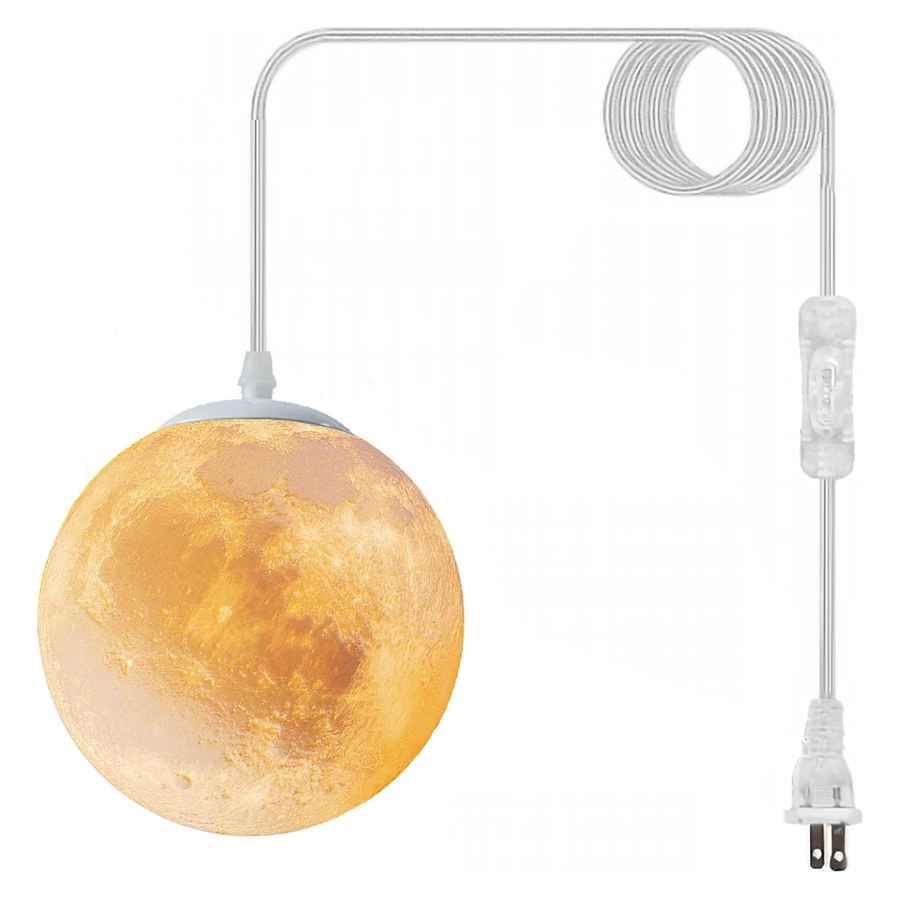
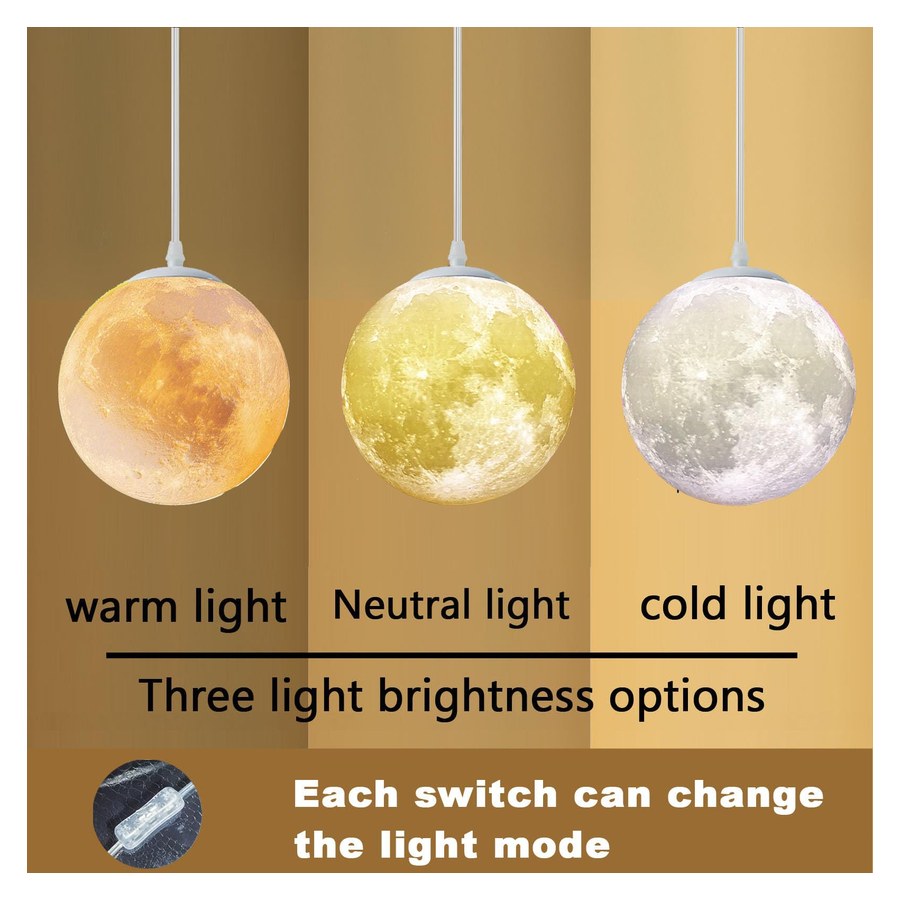
This is what our plug-in pendants ship with: a switch on the cord that cycles bright → soft → warm neutral each time you press it. It is built in, it costs nothing extra, and there is no app to set up.
What it is good for: choosing a mood for the evening and leaving it there. Warm neutral in the last hour before bed is the setting most people settle on, and in a nursery it is the only one you will use.
What it is not: continuous. There are three steps, not a slider, and you cannot sit at 40 percent. If you want fine control this will frustrate you.
The one thing to know: the setting lives in the switch, so it resets to bright each time the fixture loses power. If you control it with a smart plug or a wall switch, it will come back on bright rather than where you left it — which is exactly why option 2 and option 1 work better apart than together.
Option 2 — A smart plug or outlet timer
Not dimming at all, and still the answer I would give most people, because the problem it solves is not "I want 60 percent" — it is "I want the light on when I get home and off when I go to bed."
- A smart plug gives you on/off from your phone, schedules, and voice control through whatever assistant you already have.
- An outlet timer does the same thing for less money with no Wi-Fi, and it is the better choice for an entryway or a hallway where you never want to think about it again.
- Either way, set it to come on around dusk. A lit hall at 6 p.m. in December is worth more than any amount of dimming.
The clash: cutting the power resets the in-line switch to bright, so if you scheduled the light to come on at dusk, it will come on bright every time. Fix it by choosing the setting you want once dusk arrives, or accept bright as the automatic-on state and dim later by hand.
Option 3 — An in-line plug-in dimmer
A small dimmer module that plugs into the wall and takes the pendant's plug on the other side, with a slider or a dial. This is the only route to genuine continuous dimming that does not involve changing the bulb.
What it is good for: a dining table or a reading corner where you genuinely want to set a level and leave it.
The catches, and there are three:
- It must be rated for LED and for the actual wattage. An old incandescent dimmer on a 5–9 W LED will flicker or buzz, or simply not reach the bottom of the range.
- It fights the in-line switch. Two control points in series is how you end up with a light that only works on one combination of settings. Pick one — dimmer or switch, not both.
- It is one more thing at the outlet, in a place where outlets are usually already full.
If you go this route, buy a dimmer that says LED-compatible on the box and check the minimum load. Our pendants draw very little, and low minimum loads are what cheap dimmers get wrong.
Option 4 — Swap the bulb
Our plug-in pendants take a standard E26 base, which means any E26 bulb fits — including a dimmable smart bulb that you control from an app.
What it is good for: full control over both brightness and colour temperature, from 2700 K warm to 6500 K daylight, on a schedule.
The catches:
- The bulb's app and the cord's switch are now two competing controls — leave the cord switch on bright and do everything from the app, or it will not behave.
- Physical size matters. A 7-inch shade has limited room, and a bulb with a large heat sink may not sit right.
- Smart bulbs need Wi-Fi, and they are at their most annoying exactly when you most want a light: during an outage or a router restart. Most fall back to on/off, which is fine.
One honest note: the three-setting bulb we include was chosen because its warm neutral output suits a 3D-printed shade, whose job is to diffuse rather than beam. A very bright cool bulb in a moon shade tends to look like a lightbulb in a paper ball.
The combination that does not work
To be explicit, because this is the mistake: do not put an in-line dimmer upstream of a multi-setting switch, or a smart bulb downstream of one. The switch expects full mains voltage and decides its mode by counting power interruptions; a dimmer changes the voltage it receives, and a smart bulb expects to be the one doing the deciding. The result is a fixture that flickers, skips modes, or comes on in the wrong state.
Choose one control point:
| If you want… | Use | And leave |
|---|---|---|
| Three moods, no setup | The in-line switch | Everything else out of the chain |
| Scheduling and voice | A smart plug | The switch on your chosen setting |
| A true slider | An LED-rated in-line dimmer | The switch on bright |
| Full app control | An E26 smart bulb | The switch on bright |
Which one should you choose
- Bedroom, nursery, kids' room: the in-line switch. You want warm neutral and you want it every night, not a slider.
- Entryway or hallway: a smart plug or an outlet timer on a dusk schedule. Dimming is irrelevant; coming home to a lit hall is not.
- Dining table: an in-line dimmer if you host, the three settings if you do not.
- Kitchen island: leave it on bright. A workspace is the one place where dimming gets in the way.
More on placement and brightness in the room-by-room guides — see the bedroom guide for what the three settings actually look like at night, and the kitchen island guide for why brightness beats mood over a counter.
Brightness versus colour temperature
Worth separating, because people conflate them and then buy the wrong thing. Brightness is how much light; colour temperature is whether that light is yellow or blue, measured in kelvin. A room can be dim and cold, which feels clinical, or bright and warm, which feels like a restaurant.
- 2700–3000 K — warm. Bedrooms, nurseries, anywhere after 8 p.m.
- 3500–4100 K — neutral. Hallways, general evening use.
- 5000 K+ — cool and blue. Task lighting only, and rarely flattering in a small room.
Our three settings run from a brighter cool-ish light down through soft to warm neutral, which covers the range most homes need without asking you to think in kelvin. If you are choosing a light for a child's room, start on warm neutral and stay there — see the nursery night light guide.
All of our plug-in pendants are indoor-rated for dry areas and ship with the bulb included. Free US shipping, a 30-day return window, one-year warranty. Not sure which control setup fits? Email lightsolutionss@outlook.com.