Why islands are the hardest place to light
A kitchen island sits in the middle of the room, which means the ceiling above it is usually empty. Builders run wiring to the perimeter walls because that is where the cabinets go; the island gets a floor outlet under the counter and nothing overhead. Adding a real pendant afterwards means cutting the ceiling, fishing a cable from somewhere, patching drywall and painting — a job that costs several times what the light does and that you cannot take with you when you move.
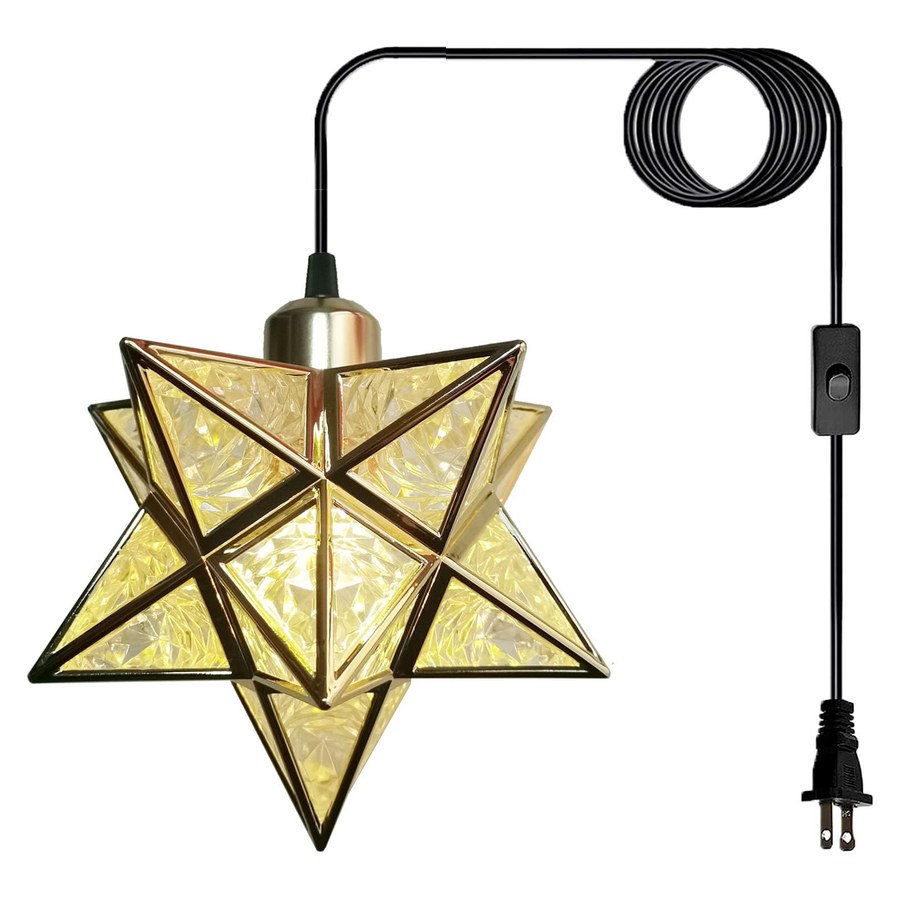
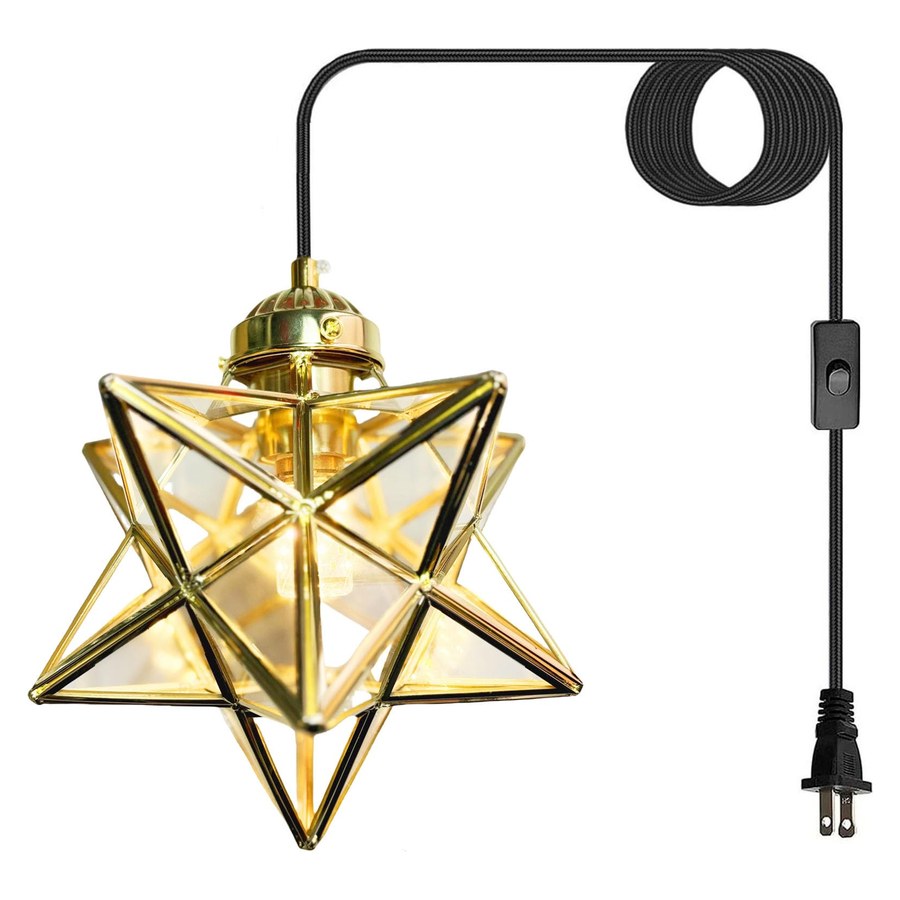
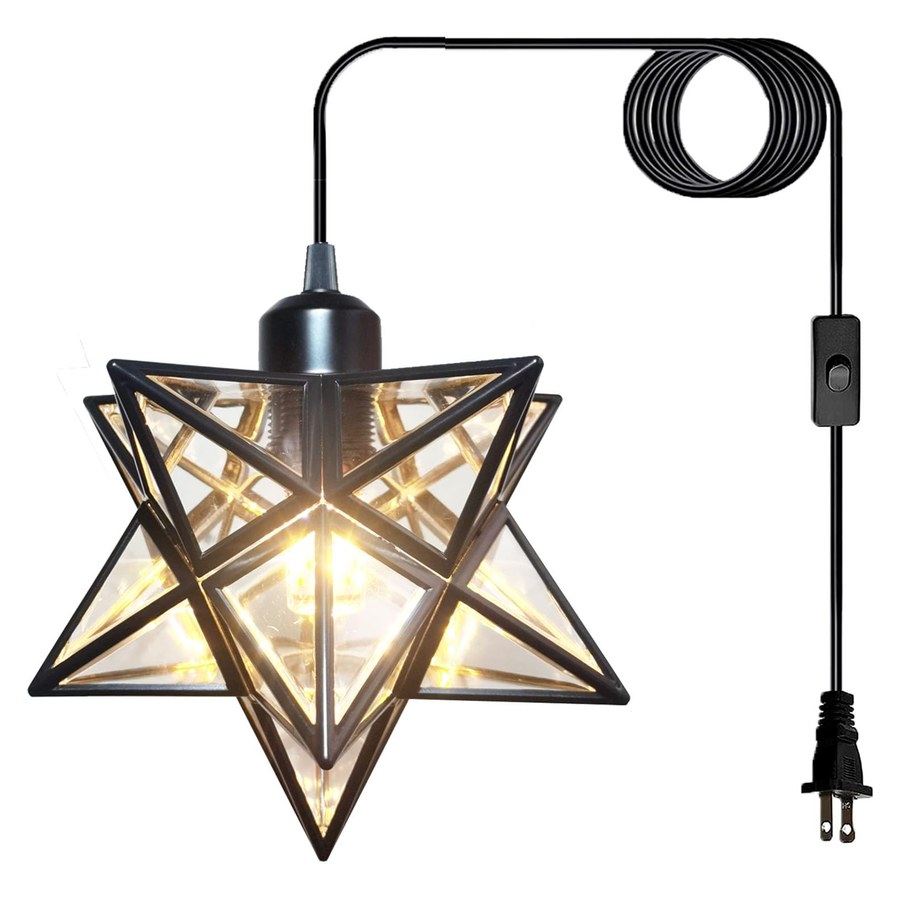
A plug-in pendant light gets the same result by going around the problem. The fixture ends in a standard US plug instead of a bare cable, so it takes its power from an existing wall outlet. The ceiling is only involved as the place you hang it from. Nothing in the house's wiring is opened, spliced or modified, and the whole thing comes down in ten minutes if you change your mind.
The trade-off is honest and worth saying up front: there is a cord. Kitchens are harder to route a cord through than bedrooms, so most of this page is about that cord rather than the light itself.
How many pendants, and what size
The two rules that actually hold up in real kitchens:
- Spacing. Roughly one pendant for every 24–30 in of island, and never fewer than two on a run longer than about 5 ft. Two small lights read as deliberate; one small light on a long island reads as unfinished.
- Scale. The shade should be about one third to one half the width of the island. A 7–7.5 in shade is right for a standard 6–8 ft island used two or three at a time; a narrow 4 ft island wants one, or two hung closer together.
| Island length | What we would hang | Spacing |
|---|---|---|
| Under 4 ft | One pendant, centred | — |
| 4–6 ft | Two pendants | About 30 in apart, each roughly a quarter of the way in from the ends |
| 6–9 ft | Two or three pendants | Evenly spaced, ends about 12 in in from the island edge |
| Island with a sink or cooktop in it | Pendants over the clear zones only | Keep them away from water and flame — see below |
All of our star pendants are the same 7.48 in (19 cm) size, which makes mixing finishes on one run easy — two gold and one black, for instance, look intentional rather than mismatched.
The 30–36 inch rule
The standard guidance for a pendant over a work surface is 30 to 36 in between the countertop and the bottom of the shade. Below 30 in and taller people find themselves looking into the bulb while they chop; above 36 in and the light spreads out instead of landing on the worktop, and you lose the point of having it there.
Two adjustments are worth making:
- 8 ft ceilings: stay at the low end of the range, around 30–32 in, so the light does not crowd the room.
- 9–10 ft ceilings: go to the top of the range, 34–36 in, and consider a slightly larger shade so the pendant does not look lost.
- Island used as a breakfast bar: if people sit at it, hang the pendant so nobody's eyeline across the table is blocked — usually the top of the range, and check it from a seated stool before you commit to the hook.
Decide the drop first, then put the hook where that drop needs it. The cord length is fixed, so it is far easier to move a hook than to shorten a cord.
Routing a cord through a kitchen
This is the part people get wrong, and it is the part that determines whether the result looks designed or improvised. Four approaches, in order of preference:
1. Straight up and along the ceiling
From the shade, run the cord up to a hook, then horizontally along the ceiling to the nearest wall, then down the wall to the outlet. Secure it with adhesive cord clips every 12–18 in and at every corner. Against a white ceiling a transparent cord is very hard to see from standing height, and this is the cleanest option.
2. Swag it deliberately
Put one hook in the ceiling above the island and a second hook nearer the outlet wall, and let the cord drape in a shallow curve between them. Done on purpose it reads as a design choice rather than a compromise, and it buys you effective length without an extension cord.
3. Down the side of a cabinet run
If the island faces a wall of cabinets, run the cord to that wall and down the side of the cabinet run — the vertical shadow line hides it almost completely. Clip it so it does not swing.
4. Through an upper cabinet or shelf
Only if you own the kitchen and are willing to drill a small hole. Not a rental option.
Never run the cord across a walkway, over a cooktop, into a sink, or along a countertop where it can be pulled by a kettle or a mixer.
Outlets, GFCI and what not to do
- Kitchen counter outlets in the US are required to be GFCI-protected. Plugging a pendant into one is fine and is in fact the safer choice — do not defeat that protection.
- Do not plug a pendant into the same outlet as a high-draw appliance. A counter outlet already carrying an air fryer, a coffee machine or a stand mixer should not also feed a light on a long run.
- No extension cords as a permanent solution, and never daisy-chained. If the outlet is genuinely out of reach, move the hanging point rather than extending the cord.
- Keep the cord off the counter and away from the sink, the dishwasher and anything that gets hot.
- Our lights are for indoor use in dry areas. That includes a kitchen, but not above a cooktop where steam and heat are constant, and not outdoors.
Which finish suits an island
| Kitchen style | Finish | Why it works |
|---|---|---|
| Warm wood, cream or shaker cabinets | Textured farmhouse gold | The texture softens the geometry so it sits comfortably with rustic and country detailing. |
| White, grey or marble, brass hardware | Brass with seeded glass | The one genuinely metal and glass option; the seeded panels scatter light, so it works as the showpiece of the room. |
| Black hardware, modern flat-panel | Black or black matte | Matches the hardware, and at night the frame disappears and only the points of light remain. |
| Traditional, or decorated for the holidays | Gold | The warmest and most traditional reading of the star shape. |
One practical note: the brass star is heavier and its panels are glass. Over an island where people stand and where a pan might be lifted, the plastic-framed stars are the more forgiving choice. Put brass somewhere it will not be knocked.
Bulb colour over a worktop
Every pendant we make ships with a three-setting E26 LED, cycled from the switch on the cord — bright, soft and warm neutral. Over a kitchen island, the reasoning is slightly different from a bedroom:
- Cooking and chopping: the bright setting. You want to see what the knife is doing.
- Eating at the island: soft. Good light on the table, and it flatters food far more than a cool white does.
- Evening, kitchen closed: warm neutral, left on low as the room's only light. This is the setting that makes a kitchen feel finished at 10 p.m.
The base is a standard E26, so any standard LED bulb fits if you want a different tone or a lower output. Unplug before you swap it.
Grease, cleaning and living with it
Kitchen air carries grease, and a pendant over an island collects it slowly. Wipe the shade with a dry cloth, or slightly damp with a drop of dish soap, every month or so; do not scrub, because the 3D-printed and moulded surfaces are textured and abrasive pads will dull them. Never submerge the fixture or run it under the tap.
Every order is covered by a 30-day return window and a one-year replacement warranty, and shipping is free within the US. If something arrives wrong, email lightsolutionss@outlook.com and we will sort it out.