What a nursery night light is actually for
Strip away the marketing and a nursery night light has three jobs:
- Let you see at night — enough to walk in, lift a baby, change a nappy and find the door handle without switching on the ceiling light.
- Not wake anyone — including the baby you just put down, and the adult who has to function tomorrow.
- Not become a sleep prop — a light that is interesting enough to look at is a light that keeps a child awake.
Notice what is not on that list: colour-changing modes, bluetooth speakers, star projectors that rotate, and "16 million colours". Those features are sold as benefits and mostly function as reasons for a toddler to stay awake negotiating settings. A single warm light with a switch is the version that gets used for years.
How dim is dim enough
Dimmer than you think. The working test is this: you should be able to see the shape of the room and the baby, but the light should not be the reason anyone is awake. If you can comfortably read a book in the nursery at 3 a.m., it is too bright.
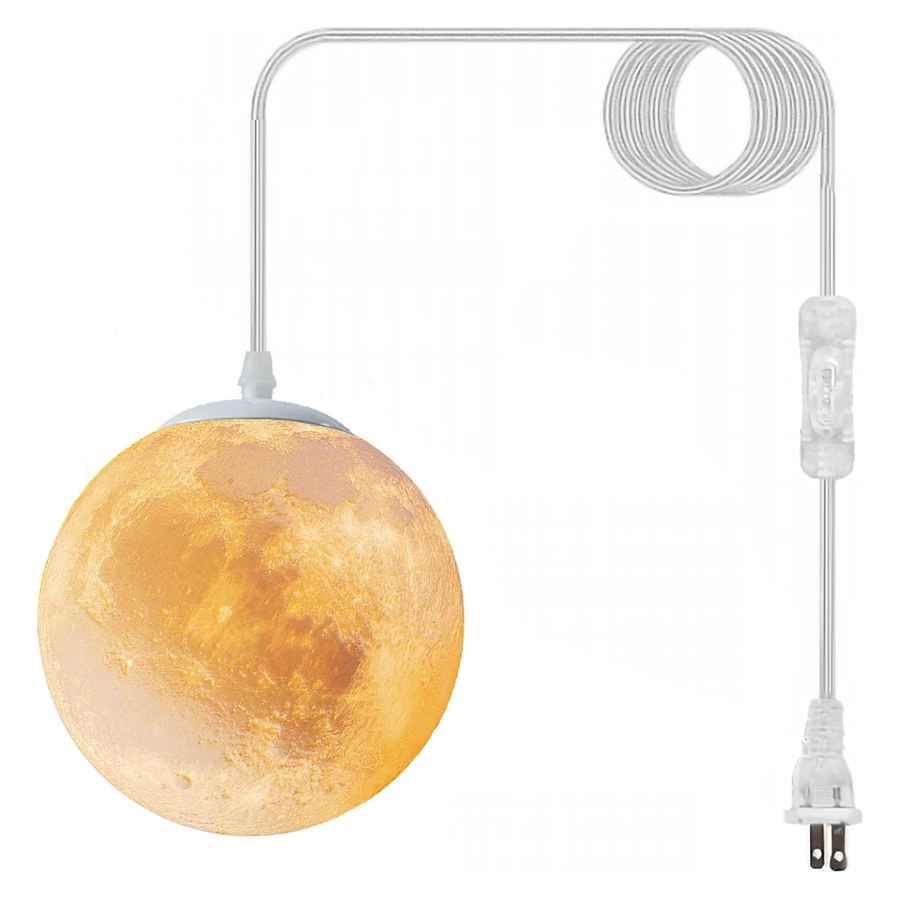
A 7-inch moon pendant with the included three-setting LED sits in a useful range here. On the warmest setting, hung at ceiling height, it gives a glow that fills the upper part of the room and falls off before it reaches the pillow — you can see perfectly well and the light is not in anyone's eyes. On the bright setting it is too much for a sleeping baby's room and is better used for the evening bath-and-book window, then switched down.
If you want it dimmer still, the base is a standard E26. Swap in a lower-output LED and it becomes a genuine all-night light. If you want it dimmer and warmer, an amber bulb is a cheap experiment worth trying.
Why warm light before sleep
This is the one piece of lighting advice worth acting on. Light in the evening signals to the body that it is still daytime; the cooler and brighter it is, the stronger that signal. Warm, dim light in the hour before bed is easier on sleep than bright cool light — for adults and for children.
Practical consequences in a nursery:
- Use the warmest setting for the last hour and for overnight. Save the bright setting for the practical window earlier in the evening.
- Keep screens out of the room entirely, which matters more than any bulb choice.
- Do not put the light where it shines into a face. A soft glow reflected off a wall or ceiling is better than any direct light, however warm.
Where to hang it
A corner, opposite the crib
The best position. The light bounces off two walls, so the room fills with a soft indirect glow and nothing points at the crib. It also means the fixture is nowhere near where a baby will eventually be able to reach.
Over the changing table
Useful and surprisingly calming — a small warm pool of light exactly where the 3 a.m. work happens. Hang it so the shade is well above the standing adult's head and the surface below is lit rather than shadowed.
Beside the nursing chair
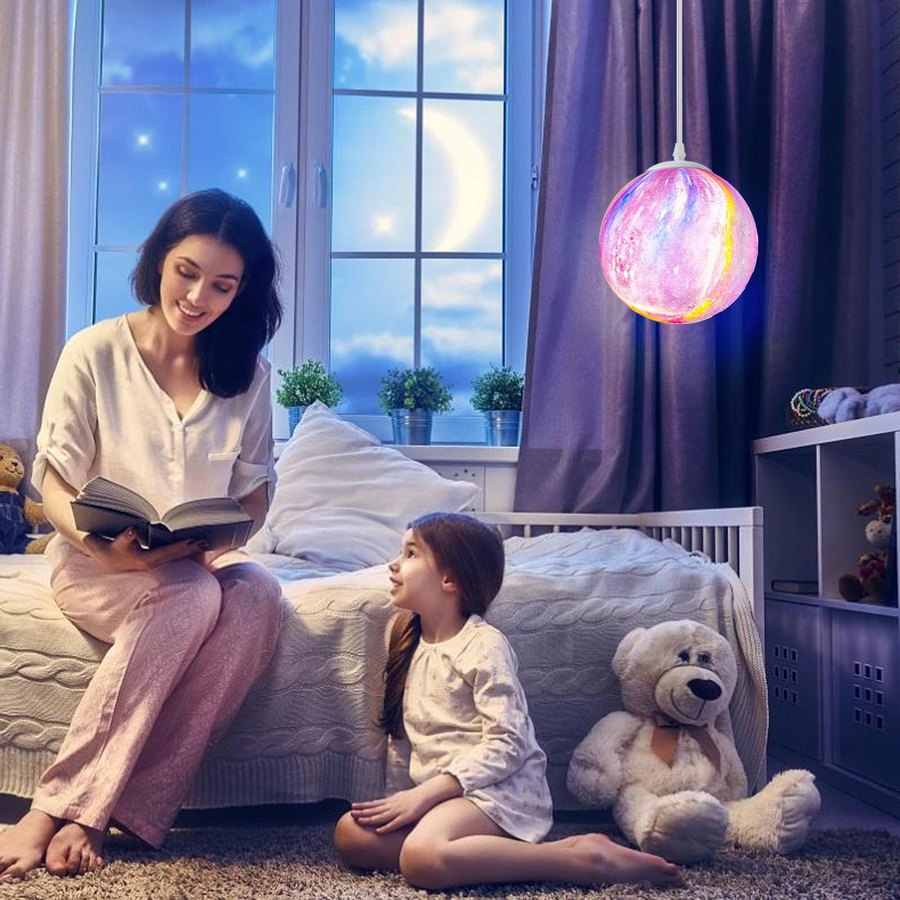
A pendant slightly off to one side of a chair gives enough light to settle a baby without putting the bulb in a feeding parent's eyeline. This is the position people keep longest, because it survives past the nursery years.
Near the door, not over the crib
If the goal is a lit route for an older child who gets up at night, put the light near the door or in the hallway outside it. That is the landing-light idea and it works better in a nursery than a light over the bed.
Keeping it away from the crib
- Never hang any light directly over a crib. Not a pendant, not a string of lights, not a mobile with a cord. This is the single most important rule on this page.
- Keep the entire cord out of reach of the crib and out of reach of a standing toddler. Babies pull cords; toddlers climb.
- Nothing with a cord should be within arm's reach of the crib slats, and no cord should run down the wall beside the crib where it can be reached through or over.
- Anchor the cord to the wall or ceiling with clips so it cannot be swung, and route it behind furniture wherever possible.
- Once a child is old enough to pull themselves up, re-check every cord in the room from their new height.
Cord safety, properly
A plug-in night light is safe in a nursery, but only if you treat the cord as the hazard it is:
- Run the cord up the wall and along the ceiling with adhesive clips, not across the floor.
- Never under a rug, never under a chair leg, never across the path between the door and the crib.
- Plug straight into the wall, or into a surge protector mounted out of reach. Cover unused outlets.
- Check the cord occasionally for damage, and stop using the light if you find any.
- Do not plug it into an outlet that also carries a heater, a humidifier and a sound machine.
Building a bedtime routine around it
The reason to choose a light with settings rather than a fixed plug-in nightlight is that the evening changes. A pattern that works for a lot of families:
| Time | Setting | What happens |
|---|---|---|
| Bath and stories | Bright | Practical light for the busy part of the evening. |
| Wind-down | Soft | Room dims, signalling that the day is ending. |
| Feed and settle | Warm neutral | Dimmest and warmest — enough to see, not enough to wake. |
| Overnight | Warm neutral or off | Leave it on if you are in and out; off if the child sleeps better in full dark. |
Switching it from the cord rather than from a wall switch means you can dim the room without walking to the door and crossing the floor you just crept across.
Four common mistakes
- Too bright. The most common one, and the easiest to fix — drop a setting or swap the bulb.
- Pointing at the crib. Indirect light off a wall always beats direct light, however dim.
- A cord within reach. Re-check it every few months as the child grows; the answer changes once they can stand.
- A light with too many features. Colour-cycling modes and app control are bedtime negotiations waiting to happen.
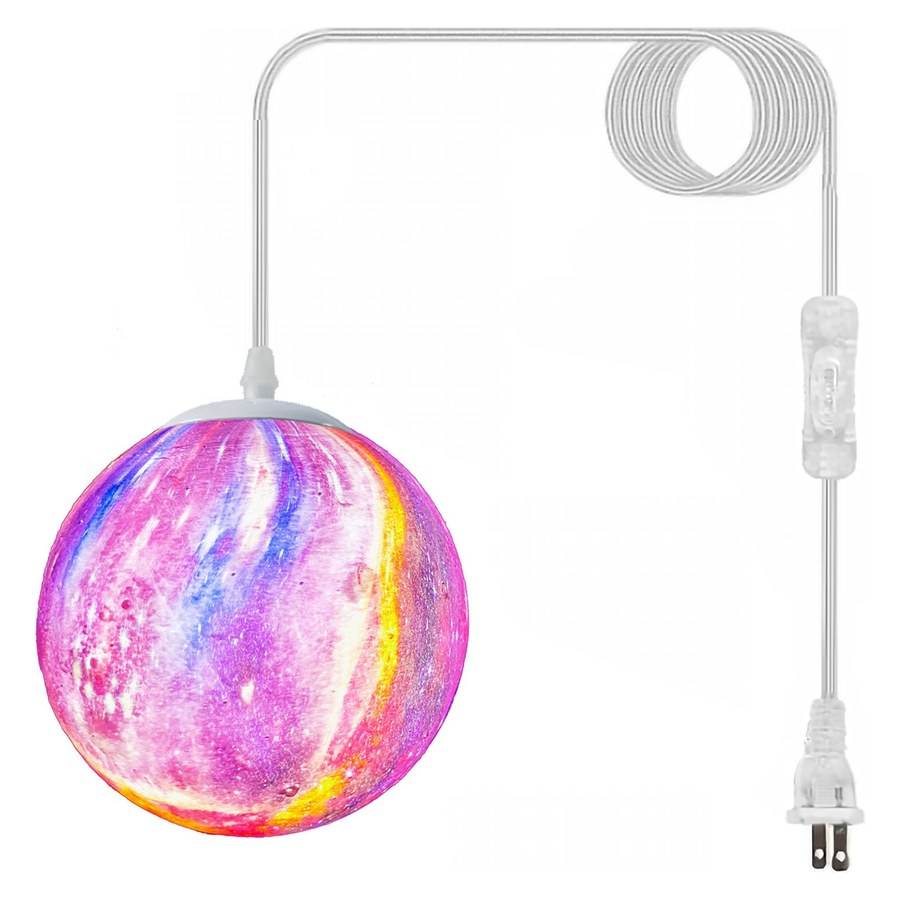
One material note, because it matters more here than anywhere else: our moon and star pendants are 3D-printed plastic, not glass and not ceramic. That is why a 7-inch moon weighs about 1.5 lb and hangs from a single hook — and it is a friendlier thing to have in a child's room than a glass shade would be. The galaxy moon is the version most people pick for a nursery.