What a 3D moon lamp is
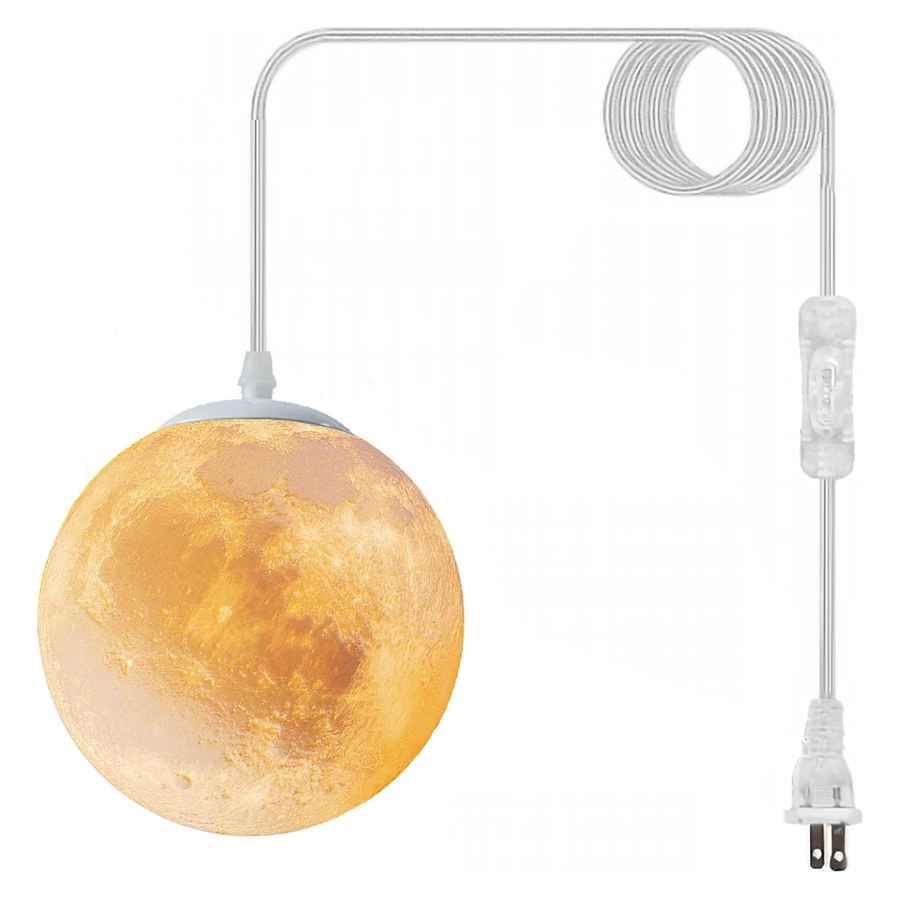
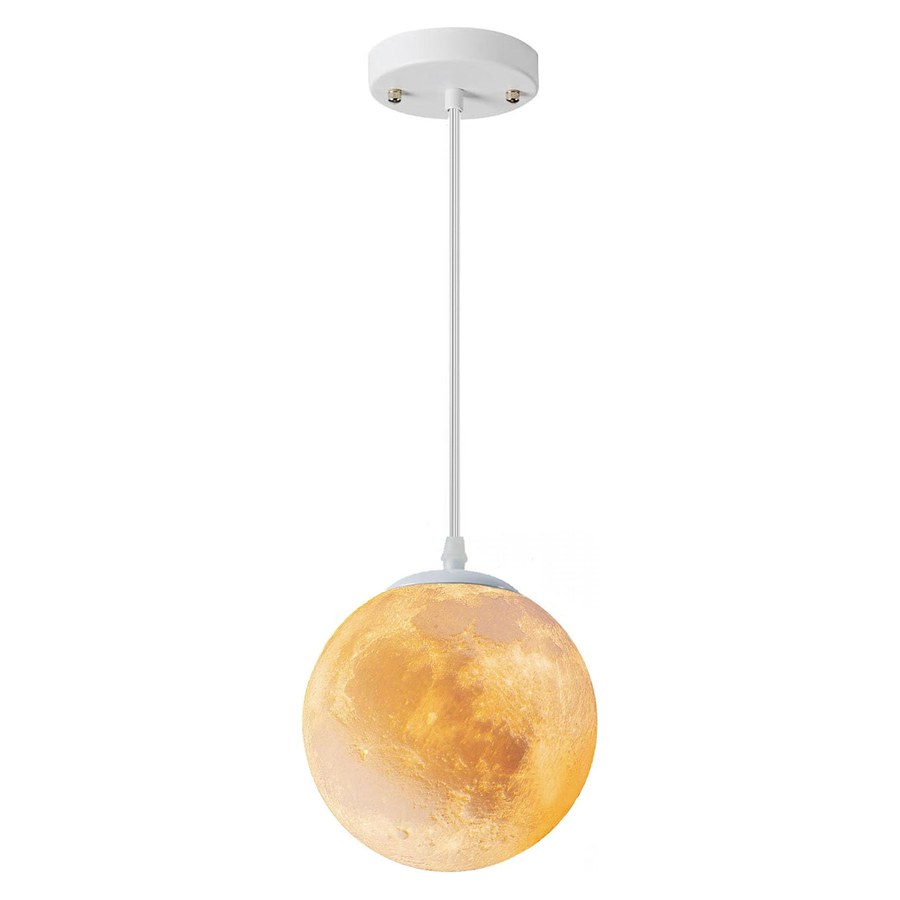
A 3D moon lamp is printed layer by layer from plastic, using a scan of the moon's surface so the craters and the dark maria sit in real relief. Light it from inside and the texture casts actual shadows — that is the whole appeal, and it is why the cheap flat-printed versions look wrong.
The material has three practical consequences in a bedroom:
- It is light. Around 1.5 lb for a 7-inch moon, which is why one hook holds it.
- It is not glass. It will not shatter, and the surface is matte rather than glossy. If you are picturing a glass orb, this is not that.
- It stays cool. With the LED bulb we ship, the shade stays cool to the touch in normal use — which matters when it hangs over a bed.
We say the material plainly because a lot of listings do not: check before you buy a moon lamp anywhere.
How bright it actually is
This is the part worth reading twice. A 7-inch moon with the included LED is ambient light, and it sits in a narrow band:
It will light the area above a bed well enough to move around safely; read as a glowing object from across the room; and let you read a few pages if you are directly under it with the rest of the room dark.
It will not light a whole bedroom to the level of a proper ceiling fixture, replace a desk lamp for homework at a table, or work as an ultra-dim infant nightlight on its brightest setting.
Owners are genuinely split on exactly this — some expect a paper-lantern glow and find it brighter than they wanted, others expect a room light and find it dimmer. Both are describing the same lamp. If you want it dimmer at bedtime, use the warmest setting (or swap in a lower-wattage E26 bulb); if you need real task light, keep a reading lamp as well.
Five places to hang it in a bedroom
1. Above the bed, slightly off-centre
The classic position. Centring it over the headboard looks symmetrical in a photo; hanging it slightly toward the foot of the bed puts the glow where you actually walk. Keep the bottom of the shade well clear of a sitting-up head.
2. In an empty corner
A moon hung in a corner reads as a floating object rather than a light source, because you see it against two walls instead of one. This is the best option in a room where the bed is against the wall and there is no ceiling position above it.
3. Over a reading chair
On the bright setting with the room otherwise dark, a moon directly over a chair is genuinely usable for a few pages of a book. It is not a task lamp, but it is closer than most people expect.
4. As a landing light between the bedroom and the bathroom
The 2 a.m. walk is when dark rooms are worst. A small moon in the hallway outside the door gives a lit route without switching on a full ceiling light and waking the house.
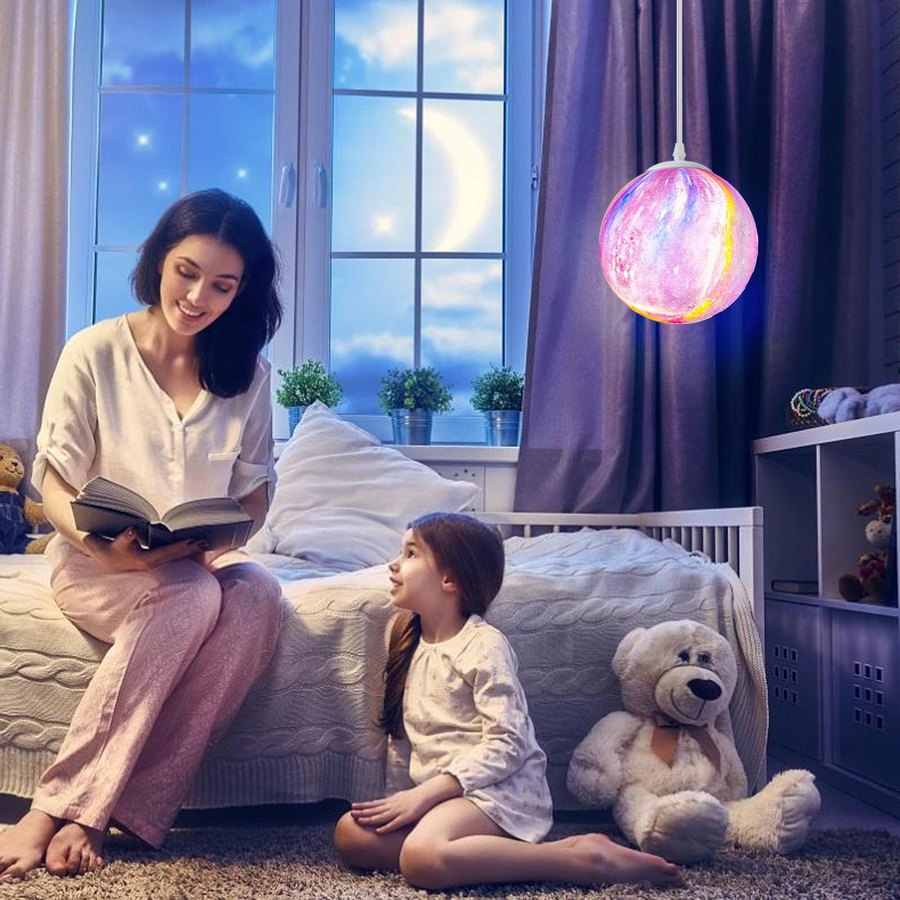
5. In a nursery
Warm setting, hung so it does not shine directly into the crib, with the cord well out of reach. Because the shade is 3D-printed plastic rather than glass, it is a friendlier thing to have over a sleeping child than a glass shade would be.
The right height
- Over a bed: high enough that the tallest sleeper cannot sit up into it. In practice, the bottom of the shade a good hand's width above a sitting head.
- In a corner: roughly at or a little above eye level when standing, so the moon reads as an object rather than a downlight.
- Over a chair: high enough that a standing adult does not brush it, low enough that the light lands on the page.
- Anywhere near a child: well above what a standing toddler can reach — and the cord above that again.
Set the drop first, then place the hook to match. The 16.4 ft cord gives you a lot of slack to work with, and most people hang it lower than they intended the first time and move it up once.
Which setting, and when
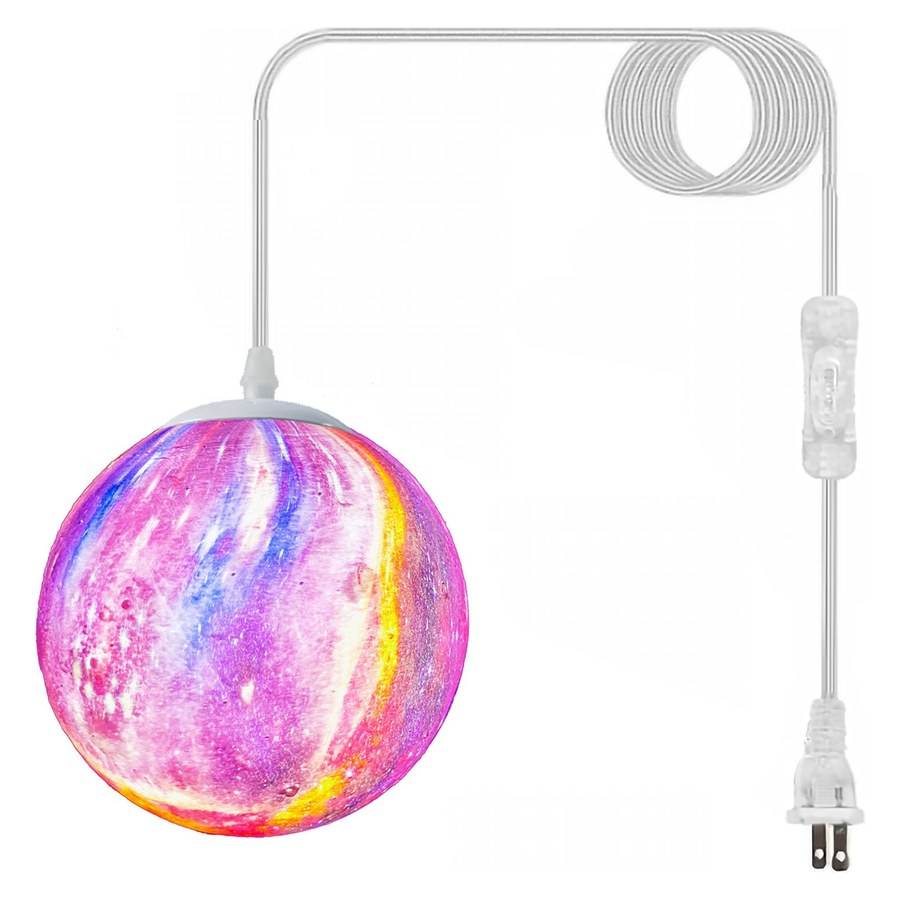
Every moon pendant we make ships with a three-setting E26 LED, cycled from the switch on the cord. In a bedroom the pattern most people settle into looks like this:
| Time of day | Setting | What it is for |
|---|---|---|
| Morning, getting ready | Bright | Actual visibility: finding clothes, tidying up. |
| Early evening | Soft | General room light that is not harsh. |
| The hour before sleep | Warm neutral | Dimmest and warmest — the gentlest of the three. |
There is a straightforward reason to prefer the warm setting late: warm, dimmer light in the hour before bed is easier on the eyes and on sleep than cool, bright light. That is the practical argument for choosing a moon with three settings over a single-tone lamp.
Cord routing in a bedroom
The cord is the one part of a plug-in moon that needs a plan, and bedrooms are the easiest rooms to get wrong because furniture moves.
- Run the cord up the wall and along the ceiling with cord clips. Against a white ceiling a transparent cord is very hard to see.
- Drop it down behind the headboard or a bookcase rather than across the floor.
- Never under a rug, never under a bed leg, never across the path between the bed and the door.
- Keep it out of reach of a crib, a bunk bed, or anything small hands can pull.
- Plug into the wall directly, or into a surge protector that is not already carrying a heater.
What if there is no outlet in reach?
Two answers. Move the hanging point closer to the outlet and let the cord swag — up to a hook near the outlet wall, then in a shallow curve to the moon. That covers most bedrooms, because 16.4 ft is a long way.
If there is genuinely no outlet and you own the home, the hardwired moon ceiling light mounts to a standard ceiling box and has no cord at all. That one is not a rental solution — it needs the wiring in the ceiling, and we recommend a licensed electrician to connect it.
Care and bulbs
- Dust with a dry or very slightly damp cloth. The printed surface has texture, so do not scrub it.
- Do not submerge it or run it under water.
- The bulb is a standard E26 LED and is included. Any standard E26 bulb fits if you want a different tone; unplug the light before you swap it.
- Indoor use only, including covered and dry areas.
- 30-day returns and a 1-year replacement warranty.