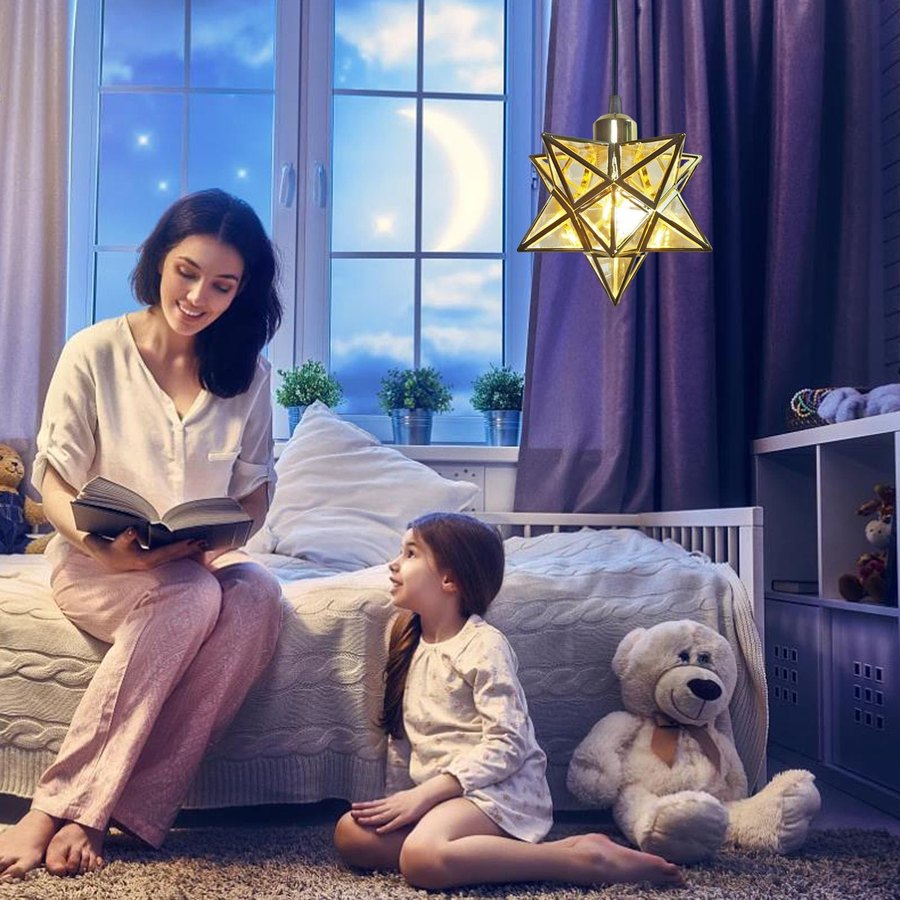
Why the window is still the best place
Two reasons, one practical and one romantic, and both still hold.
The practical one: a window is the only position in a house where a light is seen by people who are not in the room. Everything else you do at Christmas is for the people inside; a star in a window is for the street. It is also visible from much further away than people expect — a lit star in an upper window reads from the end of the block.
The romantic one: this is the original placement. The Moravian star began as an Advent teaching aid in 19th-century Germany and families hung the paper versions in their windows for the season. Hanging one in a window is not a decorating trend, it is the thing the object was for.
The modern difference is that ours are plug-in pendants with a real bulb, not paper ornaments with fairy lights inside. That makes them considerably brighter — which is the whole point — but it also means you need a fixing point and an outlet, and that the light has to be indoor-rated, which ours is.
How high in the window
The rule is the upper third of the glass. Not centred, not at the top edge.
- Too low and it sits behind the furniture, the tree or whatever is on the sill, and from the street it reads as an object in a room rather than a light in a window.
- Right at the top edge and it disappears into the frame, and half its light goes into the ceiling.
- In the upper third it floats in the glass, which is the effect you want.
For a standard window with a header around 80 in from the floor, that puts the star somewhere between 60 and 70 in — eye level or slightly above for someone standing outside, which is the sightline that matters.
How close to the glass
Closer than feels natural. Six inches or less between the star and the pane.
Every foot you move it into the room does two things: it shrinks the star from outside, and it starts lighting the window reveal and the wall instead of the street. The whole illusion depends on the light source being right at the plane of the glass.
If your window has a deep sill or a radiator below it, you may have to come forward a little — that is fine, but come forward rather than down.
The room behind it matters most
This is the part nobody mentions and the difference between a star that reads and one that does not.
A lit star is not especially bright relative to a lit room. If the room behind it has the ceiling light on, the star competes with all of that and loses — from the street you see a lit room with something in it. Turn the room lights off. Against a dark interior, the same star is visible from several hundred feet.
- Put the star on its own schedule or timer, and let it be the only light in that room after dark.
- If the window looks into a room you use in the evening, accept the trade-off: the star wins from outside, and you sit in the dark or in another room.
- Watch out for reflections. At night, glass is a mirror from inside — what you see looking out is your own room. Check the effect from the street, not from the sofa.
Which finish reads best through glass
| Finish | From the street at night | Best with |
|---|---|---|
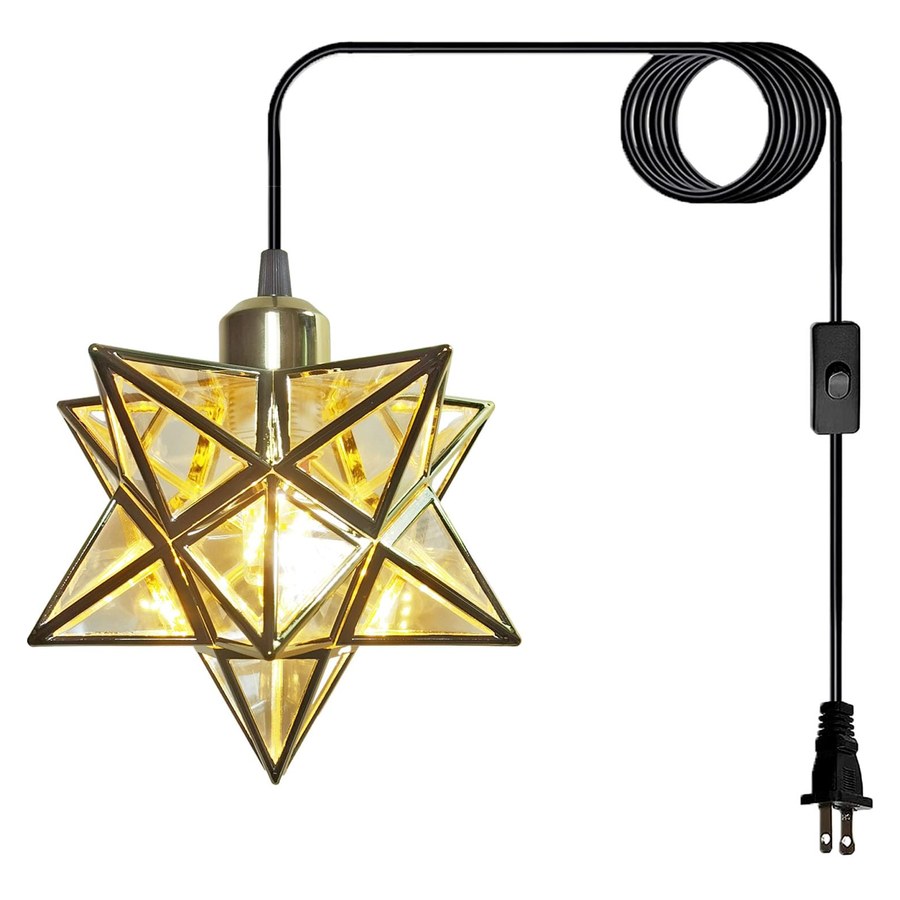
| Gold | Warmest and most traditional — reads as candlelight through a warm frame. | Traditional decor, warm white lights, brick or stone exteriors. |
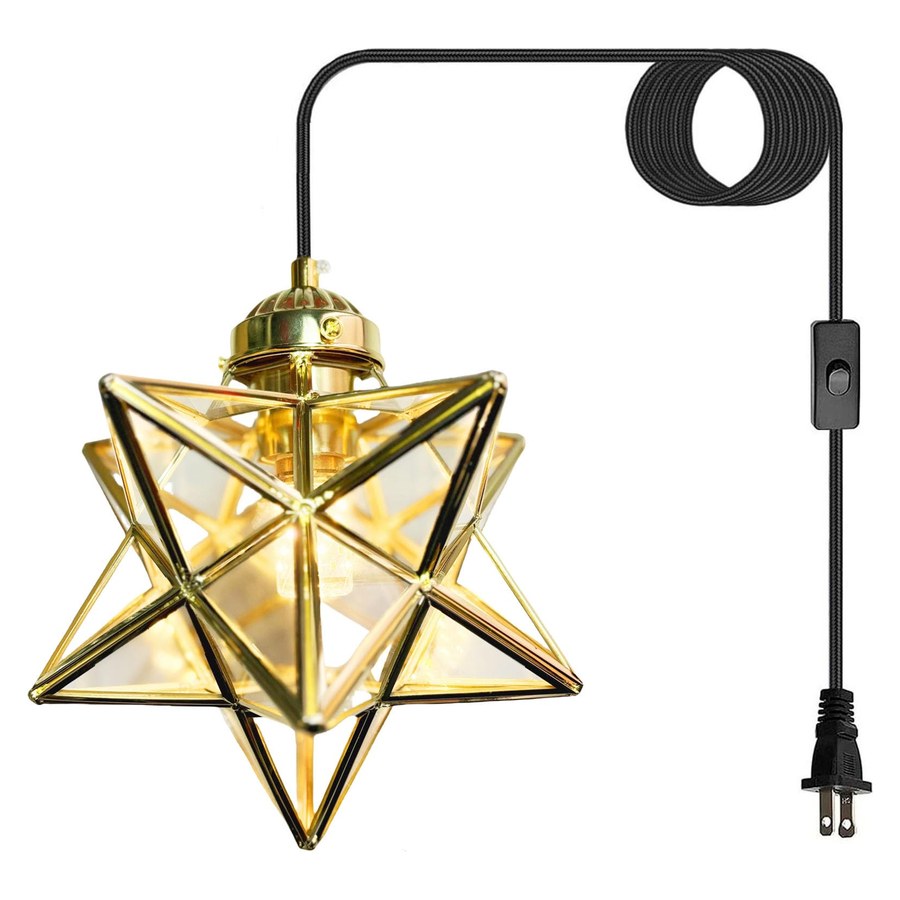
| Brass & seeded glass | The most sparkle. Seeded glass breaks every point into dozens, which carries furthest. | Metallic decor, larger windows, a house set back from the road. |
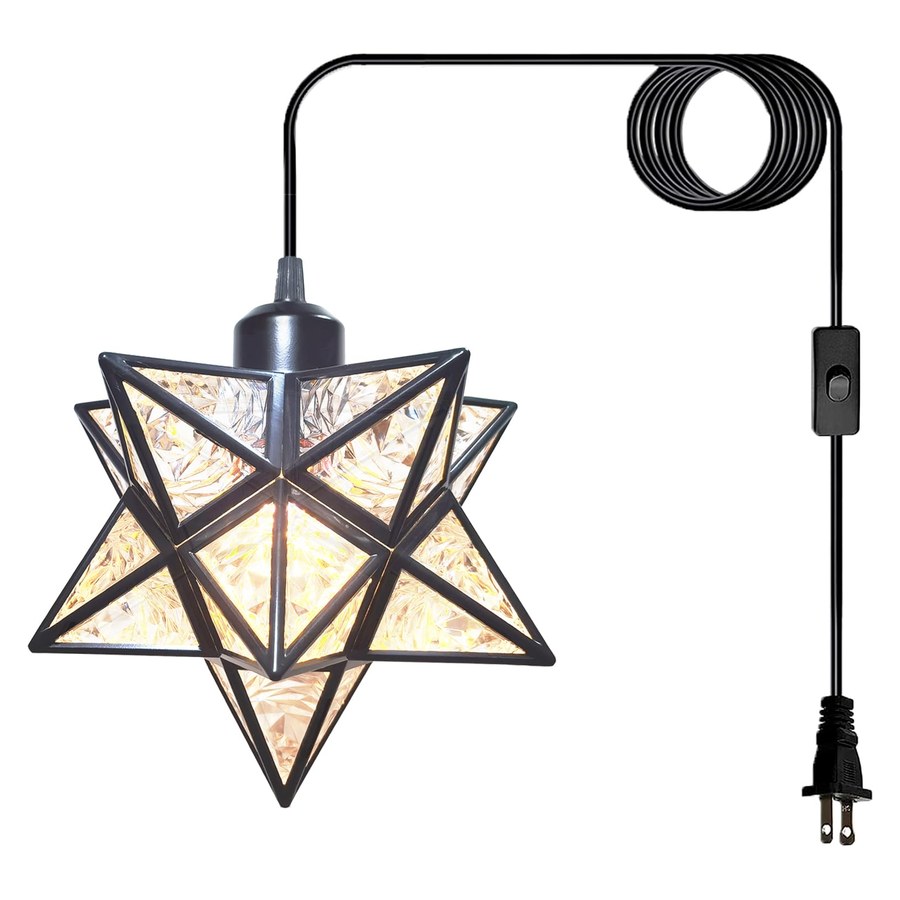
| Black matte | A silhouette by day, pure points of light at night. The most modern reading. | Scandi or minimal decor, white or pale walls, new-build exteriors. |
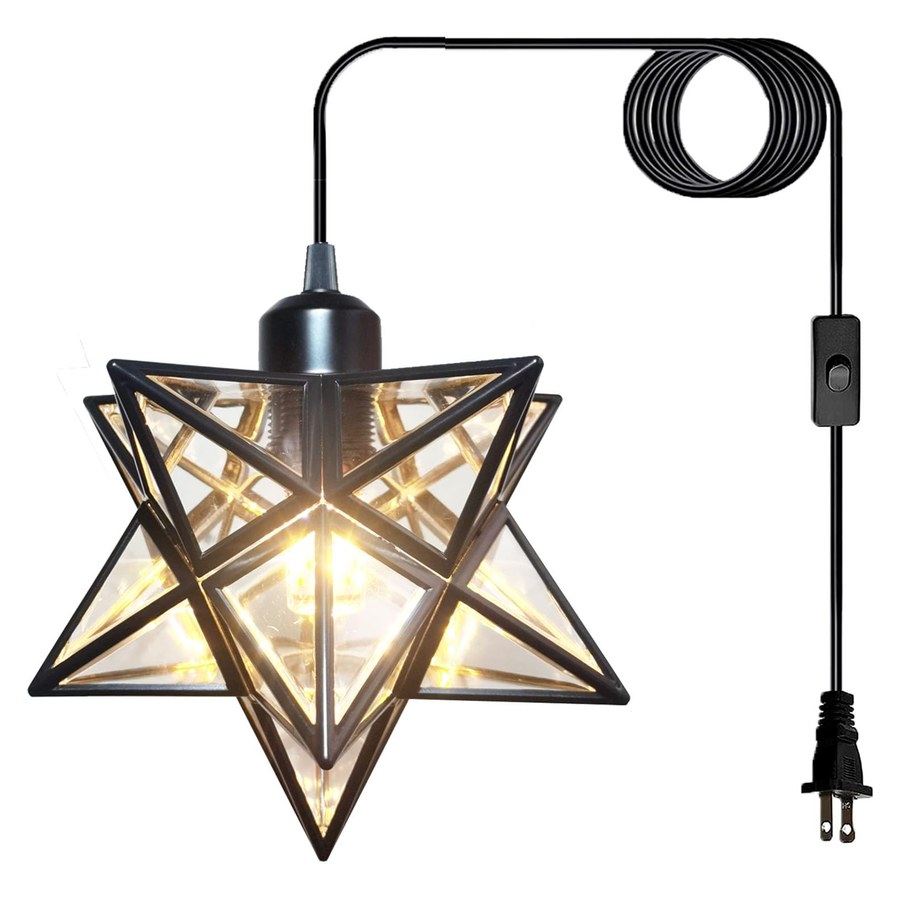
| Black | The frame vanishes at night; you see only the lit points. | Dark trim, moody interiors, anyone who wants the shape not the object. |
Two practical notes. All four plastic-framed stars weigh about 1.5 lb, so a removable hook is enough — which matters in a window, where you are often fixing into trim rather than ceiling. The brass star is heavier and its panels are glass, so hang it where nothing will knock it.
And a caution specific to this placement: the four plastic-framed stars are moulded plastic, and a window gets direct sun. They are fine in a normal window, but do not put one in a south-facing bay that bakes all afternoon or behind glass that concentrates heat.
Cord and outlet, in a window bay
Windows are the easiest cord run in the house and the most visible one, which is an awkward combination. The cord has roughly two feet to travel — straight down to the floor or out to the nearest wall — and everybody who comes in the door will see it.
- Go down the inside edge of the frame. A cord running vertically down the window reveal is almost invisible; the same cord diagonally across the glass is not.
- Clip it at the top and bottom at minimum, and at every corner in between.
- Tuck it behind the curtain if you have full-length drapes. This is the cleanest answer in a formal room and it costs nothing.
- Do not run it across the sill where it will be knocked by anything put there, and never across the floor of a walkway.
- Keep it off the radiator if there is one under the window. This is the single most common mistake with window placements.
- No daisy chains. Plug into the wall or into a surge protector that is not already carrying the tree lights and a heater.
What to hang it from
Three options, depending on your trim:
- The existing curtain rod. If you have one with a bracket that projects from the wall, a star hung from the rod itself sits exactly where you want it — high, close to the glass, and with no new holes. This is the best answer by a wide margin.
- A small cup hook in the top of the window frame. Two minutes with a screwdriver, and into wood trim it is very secure. The hole is tiny and easily filled when you take it down.
- A removable adhesive hook on the wall above the window. The rental answer. Smooth painted surfaces only, cleaned with alcohol first, and respect the cure time before you hang anything.
If none of those work — a metal frame, or a window in a tiled wall — hang it from the ceiling a foot in front of the glass instead. Slightly less perfect, entirely serviceable.
Put it on a timer
A star in a window that is switched off at 9 p.m. because nobody remembered is a wasted star. An outlet timer or a smart plug set to come on at dusk and off around 11 p.m. costs very little and does the job every night without you thinking about it.
Remember that cutting the power resets the in-line switch to its brightest setting, so if you want the warm mode, set it once after dusk or leave the switch where you want it and accept bright on the automatic cycle. Full detail on this in our guide to controlling brightness.
Leaving it up after Christmas
The argument for a real star pendant rather than a seasonal ornament: a 26-point star is geometry, not iconography. In a window with no tinsel around it, it reads as a light that happens to be star-shaped, and it works in February.
If you want it to stay, the finishes that survive the transition are black matte and brass — neither reads as seasonal. Gold is the most Christmassy of the four and the most traditional, which is either the point or a reason to choose differently.
To take it down: unplug first, lift the shade off the hook rather than letting it hang by the cord, and remove any adhesive hook with dental floss behind the pad rather than pulling it. Store it in the box if you still have it — the points are the fragile part. Or leave it up, which is what most people end up doing.
Free shipping within the US, a 30-day return window and a one-year warranty. Not sure which finish or which fixing? Send a photo of the window to lightsolutionss@outlook.com and we will tell you what we would do.