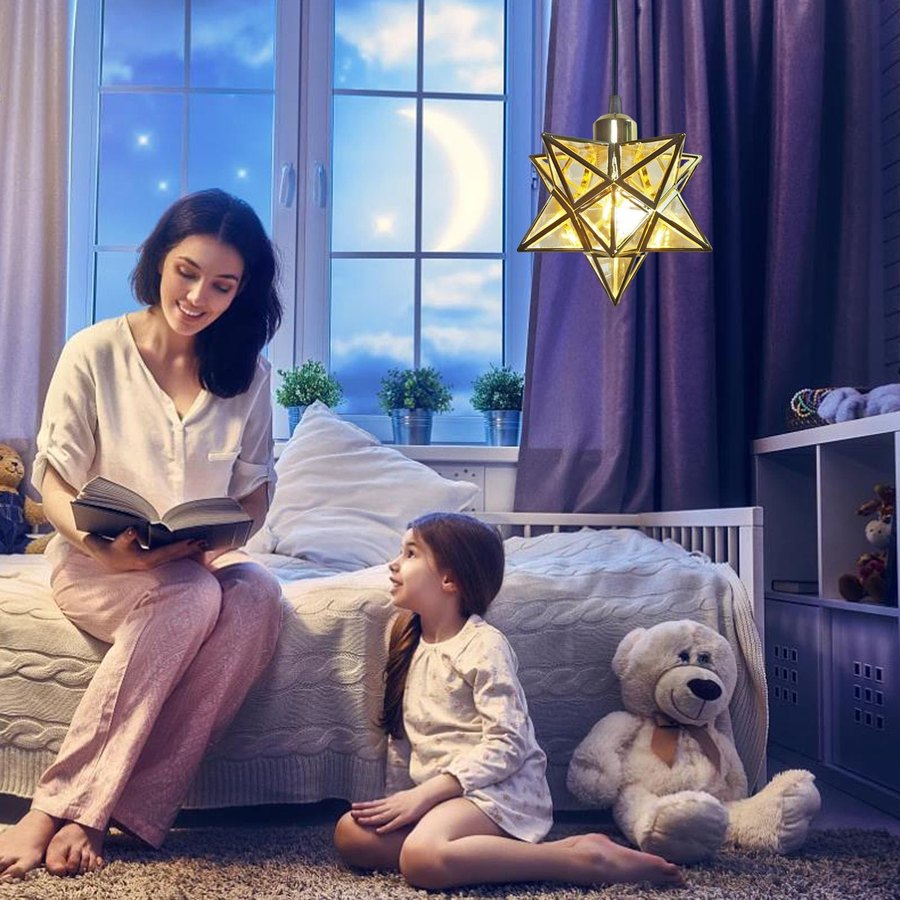
What "7.48 in" actually measures on a star
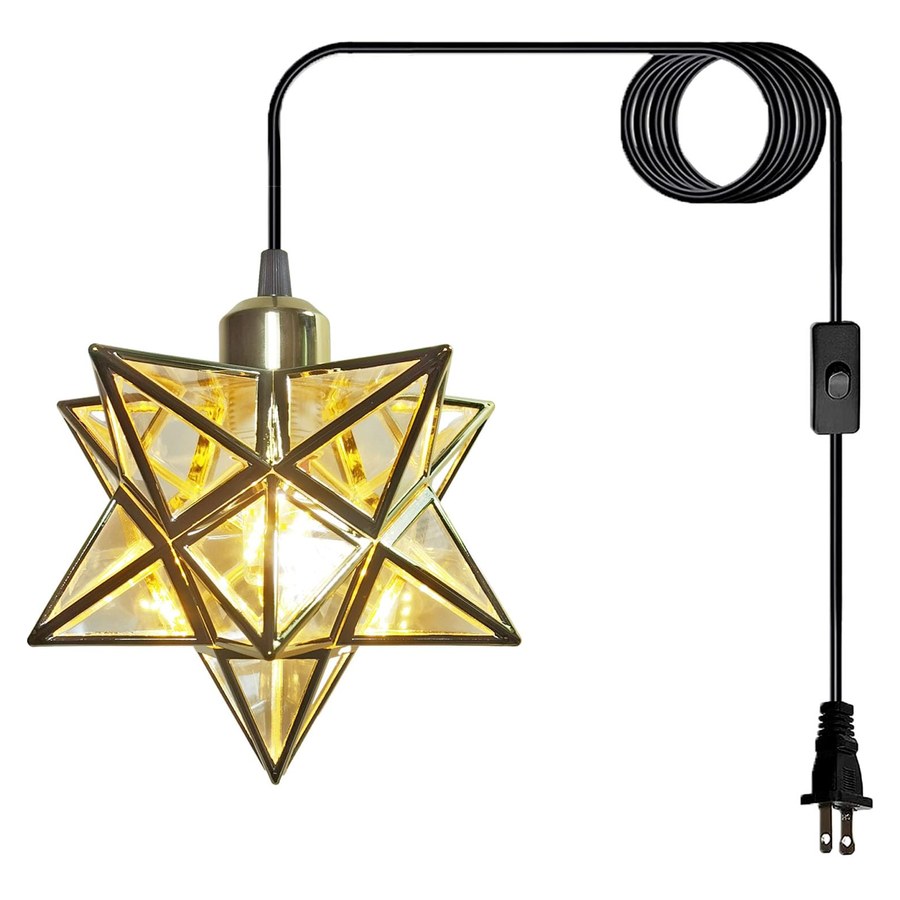
First, a honesty note about how star pendants get measured. On a globe or a drum shade, the diameter is unambiguous. On a 26-point star it is not, because the shape has points sticking out of it in three dimensions and a hollow middle. When we say 7.48 in, we mean point to opposite point across the widest span — the diameter of the sphere the star would fit inside.
That means two things when you are trying to picture it in your room:
- The solid part is smaller than the number. The frame between the points is thin, so most of what you perceive is the glow and the silhouette, not a filled disc. A 7.48 in star blocks less light and less view than a 7.48 in drum shade by a wide margin.
- The glow is larger than the number. Light escapes through every facet in every direction, so the halo around a lit star reads noticeably bigger than the frame. At night — which is when you will actually look at it — a 7.48 in star occupies roughly the visual space of a 10–11 in shade.
If you want to test it before buying, cut a 7.5 in circle out of paper, tape it to the ceiling where you are thinking of hanging it, and stand back. Then add an inch and a half of imaginary glow around the edge. That is closer to the truth than the paper.
Ceiling height: the number that matters most
Star pendants scale with ceiling height more than with room size, because a star hangs in the middle of the air and is seen from below and from across the room at the same time.
| Ceiling height | What works | Notes |
|---|---|---|
| 8 ft (standard) | One 7.48 in star | The sweet spot. Anything larger starts to dominate the room and you will bump your visual sightline from the doorway. |
| 9 ft | One 7.48 in star, hung lower | Do not size up; drop it. The extra foot of ceiling should become extra drop, not a bigger fixture. |
| 10 ft | One 7.48 in star, or two in a run | A single small star can look lost on a 10 ft ceiling over a big room. Two hung at different heights reads as deliberate. |
| Vaulted / cathedral | One 7.48 in star hung from the ridge, or a swag to the wall | Height is not the problem here, angle is. See the swag note below. |
| Under 8 ft (basement, attic bedroom) | One 7.48 in star, hung high and tight | A larger shade would be in your eyeline constantly. The small star is the correct answer, not a compromise. |
The rule underneath all of this: a pendant should not enter your sightline when you are standing in the doorway. If it does, it is too big or too low, and no amount of style compensates for walking into a light fitting.
Over a table or island: the width rule
Hanging over furniture is the one place where a size formula genuinely helps. Take the width of the table or island and the pendant should be somewhere between a third and a half of it in apparent width.
- 30 in bistro table: a 7.48 in star is a quarter of the width — slightly small on paper, but because it glows it reads right. This is a common pairing and it works.
- 36–42 in round table: ideal. The star sits at roughly a fifth to a quarter of the diameter and the light pool covers the surface.
- 48 in rectangular table: one star over the centre is fine, but two — one over each third — looks intentional where one looks like you ran out of budget.
- Kitchen island 6–8 ft long: two stars, or one over the sink end if that is where you actually stand. Do not try to light the whole island with one small pendant; you will end up with two bright patches and a dark middle.
And the height rule that goes with it: the bottom of the star should sit 30–36 in above the tabletop or counter. Low enough to light faces, high enough to see over when seated. With an 8 ft ceiling and a 30 in table that leaves very little slack, which is another argument against going bigger — a large shade at that height crowds the table.
Visual weight: why black looks smaller than brass
Two stars of identical dimensions do not look identical, and this is the thing people get wrong most often when they size up "because the room is big".
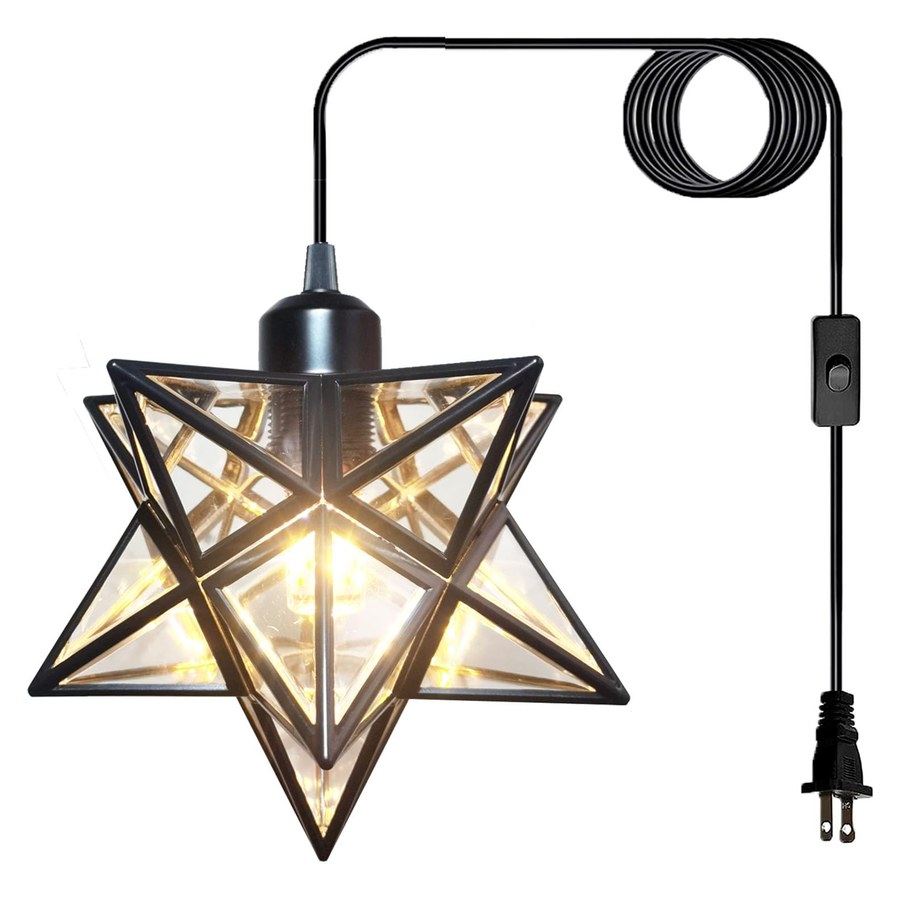
- Black and matte black read as smaller than they are. The frame disappears against a dark ceiling or a dark evening room and what you see is the points of light. Matte black in particular is the quietest finish we make — it reads as modern design rather than as decor. See the black Moravian star pendant and the matte black version.
- Gold reads as about true size. It catches whatever light is in the room and holds an outline. This is the gold Moravian star pendant.
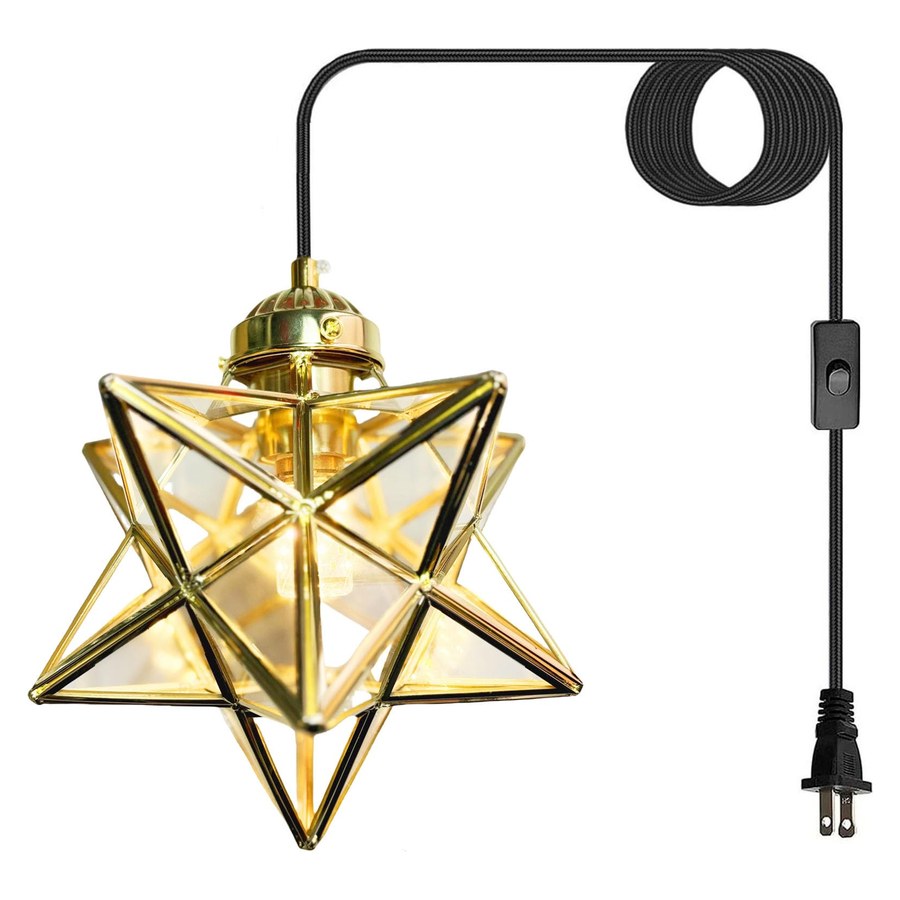
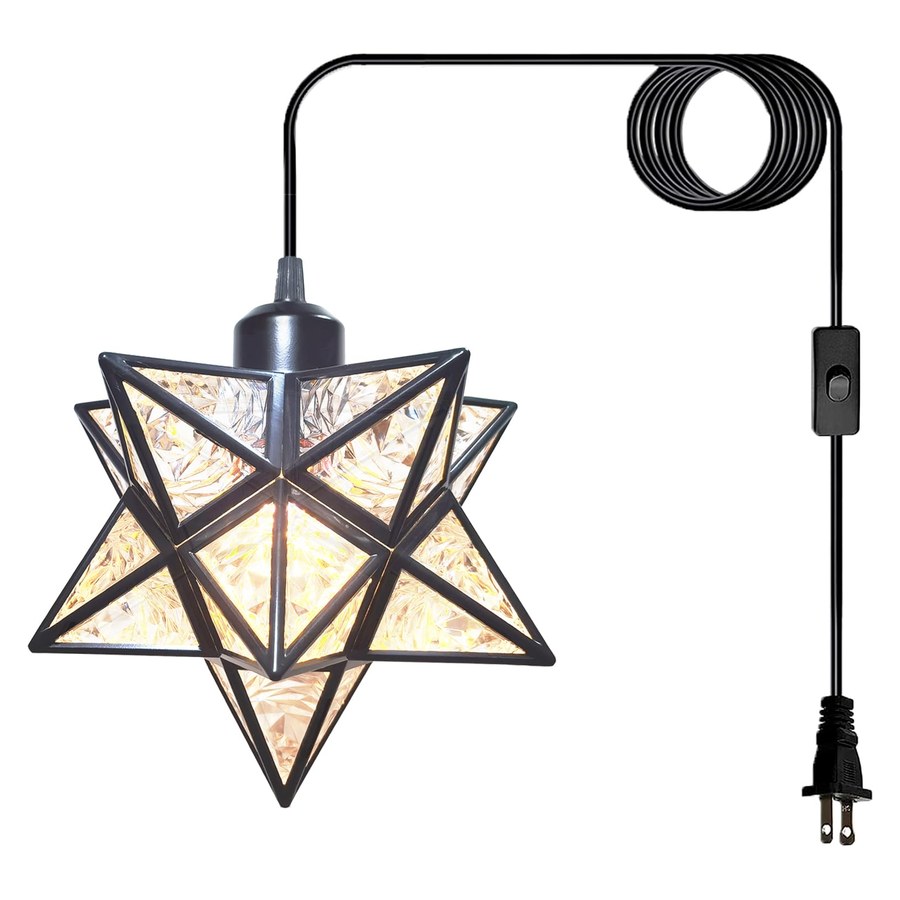
- Brass with seeded glass reads as larger, and heavier. The glass panels have real mass, they bend the light into a hundred small points, and the brass frame has a visible edge thickness. If you want presence without going up in diameter, this is the finish that does it — see the brass and seeded glass star.
So the practical version: if your room is large and you want more presence, change the finish before you change the size. A brass star in a big room does the job a bigger plastic one would, and it does not eat your headroom.
When two small stars beat one large one
This is the answer to almost every "it needs to be bigger" instinct:
- Long surfaces. An island, a hallway, a long dining table. Two stars at different drops is the established solution and looks far better than one oversized fixture.
- Corners. A single star in a corner is one of the best uses of a plug-in pendant — two walls within a foot means the cord has almost nowhere to travel. Two corners, two stars, and the room is lit.
- High ceilings. Two small stars hung at staggered heights give a vaulted room the layered look that one large fixture cannot.
- Seasonal setups. If the star only comes out in December, two small ones at the window are easier to store than one large one, and the points are the fragile part in a box.
With plug-in pendants this is trivially easy: no second junction box, no second switch, just a second hook and a cord run to the same wall. That is the whole advantage of the format — the marginal cost of a second light is a hook, not an electrician.
Room by room: what we would hang where
| Room | What we would do |
|---|---|
| Bedroom | One star, offset to one side of the bed, roughly shoulder height when sitting up. Matte black if you want it to disappear during the day; gold if you want it to be the thing you see. |
| Kitchen island | Two gold stars if the island is over 6 ft; one over the end you work at if it is shorter. |
| Entryway / hallway | One star centred over where people stand, with 6 ft 6 in of clearance to the floor. This is a hard number, not a preference. |
| Nursery or kid's room | A star is decorative rather than calming — for sleep, the moon is the better object. If you do use a star, hang it high and out of reach and use the warm setting. |
| Dining room | One star over the table centre up to 48 in of table; two beyond that. |
| Window at Christmas | One gold star, hung close to the glass so it reads from the street. Size barely matters here — from outside, everything is a point of light. |
The three sizing mistakes
- Sizing for the room instead of for the spot. A star in a big room is not competing with the room; it is lighting a table or a corner. Judge it against what is under it.
- Going bigger to get more presence when changing the finish gets you there without losing headroom.
- Forgetting the glow. A lit star occupies more visual space than its frame. Size it in the dark, not in the daylight.
Quick answers
If you only take one line from this guide: a 7.48 in star is the right size for a standard 8 ft ceiling over a table up to about 48 in, and the fix for a bigger room is a second star or a brass finish, not a bigger star.
Free shipping within the US and a 30-day return window, so if you get it wrong you can swap it without an argument. Still unsure? Send us the room dimensions and a photo to lightsolutionss@outlook.com and we will tell you plainly whether one is enough.