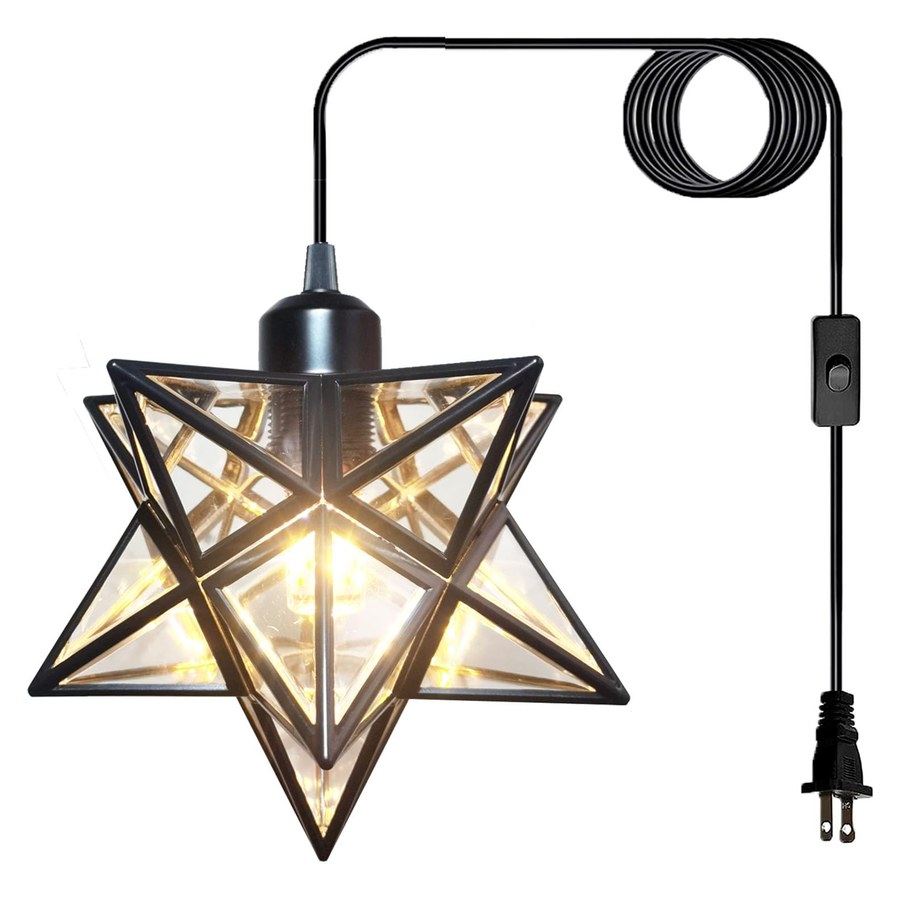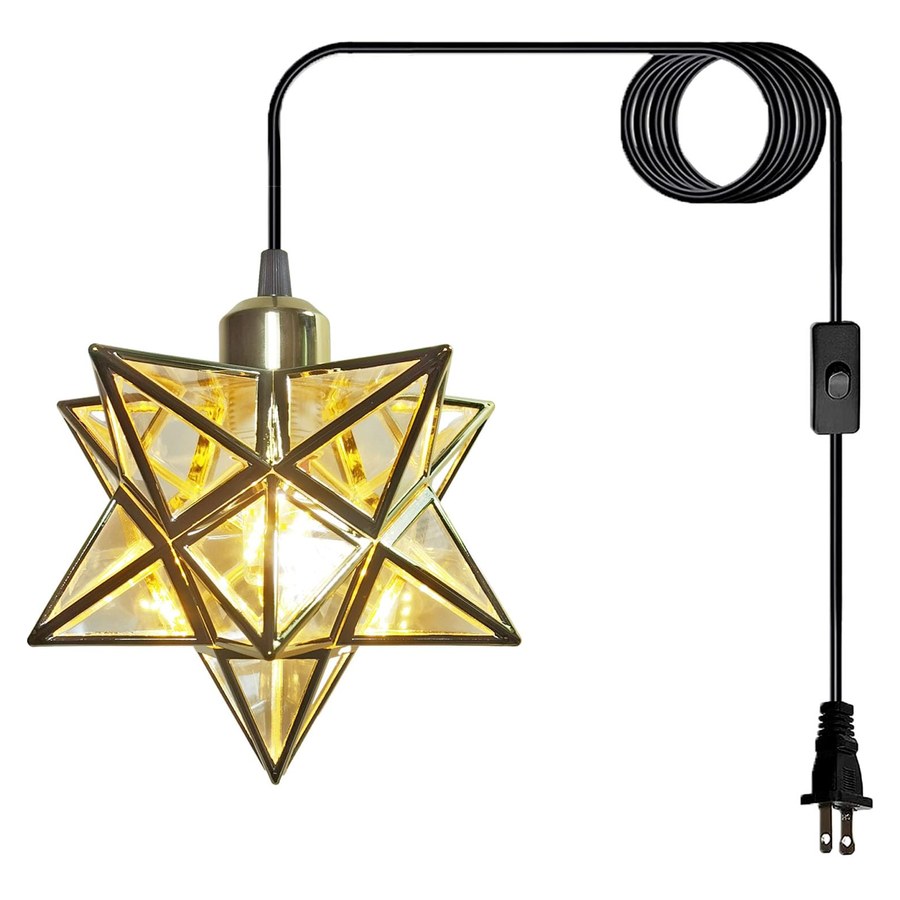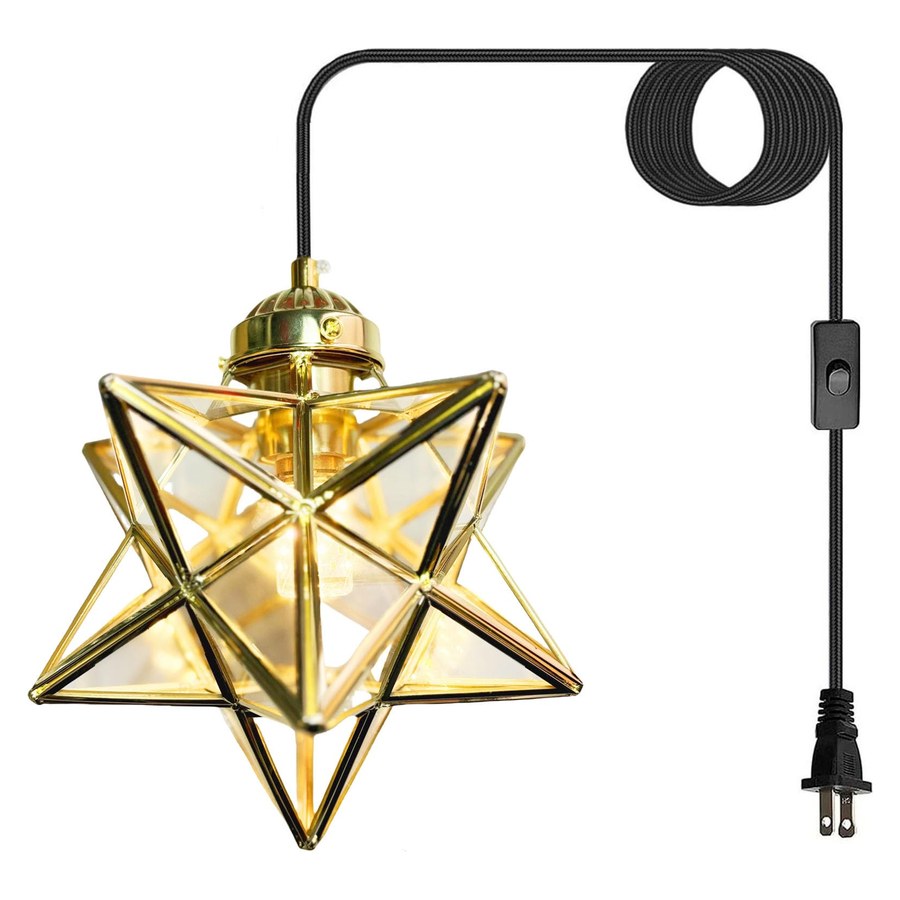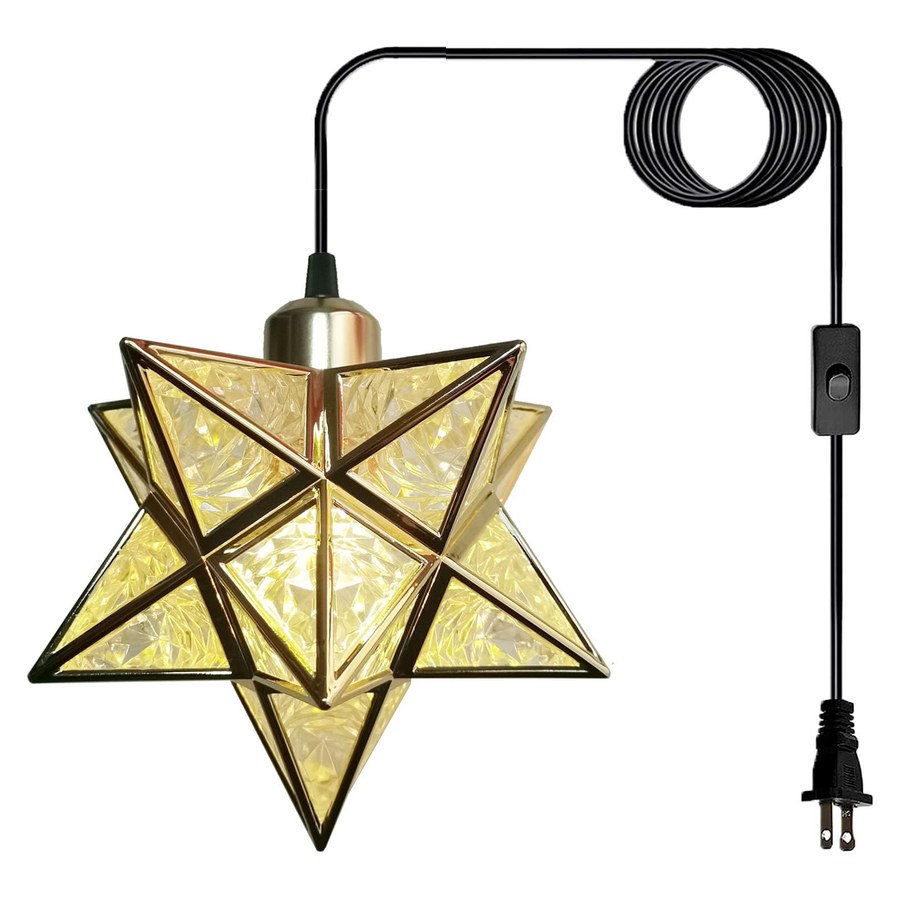
The shape stays the same — the material is what changes
Every star here is the classic 26-point Moravian star: 18 square points and 8 triangular ones, the form that has been made in Herrnhut, Germany since 1897 and that became an Advent symbol across the Moravian Church. If you want the background, we wrote it up properly in the Moravian star guide.
What differs between our models is the frame material, the panel material and the finish — and those three things decide how the light behaves in a room, how much the fixture weighs, and roughly where it belongs.
Five finishes, side by side
| Finish | Frame & panels | Light character | Weight | Best room |
|---|---|---|---|---|
| Black | Molded plastic frame, plastic panels | Crisp, high-contrast points; the frame disappears at night | ~1.5 lb | Modern rooms, hallways, kids' rooms |
| Black matte | Molded plastic frame, matte panels | Softest of the plastic frames — no glare, no reflections | ~1.5 lb | Bedrooms, minimalist and Scandi rooms |
| Gold | Molded plastic frame in a warm gold, clear faceted panels | Warm and bright; the facets split one bulb into many points | ~1.5 lb | Dining rooms, entryways, holiday decorating |
| Brass & seeded glass | Solid brass frame, seeded glass panels | Sparkling and diffused — the bubbles in the glass break up every point | Heavier | Kitchen islands, entryways, gifts |
| Farmhouse gold | Textured gold frame, plastic panels | Warm, slightly rustic; texture softens the edges | ~1.5 lb | Kitchen islands, country and cottage kitchens |
Two honest notes, because listings elsewhere are often vague about this. First, four of these five are molded plastic frames — that is what makes a 7.48-inch star weigh about 1.5 lb and hang from one hook without shattering if it is knocked. We state the material on every product page and we are saying it here. Second, only the brass star is genuinely metal and glass; it costs more and it is heavier, for a reason you can see.
Black and matte black
Black is the most forgiving finish in a modern room. At night the frame effectively vanishes and you are left with the points of light, which is a striking effect against a pale wall. In daylight, a black star reads as a graphic object rather than a light fixture — which suits a hallway or a room where you do not want the light to be the loudest thing.
Matte black goes one step further: no sheen at all. If the room has matte black hardware, cabinet pulls or window frames, this is the one that matches. Between the two, glossier black has slightly more presence in daylight and matte is calmer under a bright ceiling light.
Gold
The gold star is the traditional-looking one, and the one people reach for at Christmas. Warm gold frame, clear faceted panels, and a light that reads warmer than the black versions even on the same bulb setting. It is the finish that looks most like the Advent stars you see in Christmas markets — and it still works in July over a dining table.
Brass with seeded glass
This is the outlier in the range and the reason is the glass. Seeded glass has small bubbles trapped in it; each one bends the light passing through slightly, so instead of clean star-shaped patches you get a soft, sparkling scatter that shifts as you walk past. It is the finish that photographs best and the one to choose if the star is a gift or a focal point over an island.
The trade-offs are real: it weighs more, it costs more, and the panels are glass, so it belongs somewhere it will not be knocked. In a kids' room or a high-traffic hallway, take a plastic-framed star instead.
Textured farmhouse gold
Same silhouette, different surface. The farmhouse star has a textured gold frame that catches light along its edges, which softens the geometry just enough to sit comfortably in a country or cottage kitchen. It is the one we would put over an island with a butcher-block top or open shelving, and it pairs well with warm wood and cream cabinetry.
Which finish for which room
| Room | Finish we would pick | Reasoning |
|---|---|---|
| Kitchen island | Farmhouse gold, or brass if you want one showpiece | Both stand up to a tabletop; brass for the sparkle, farmhouse for warmth. |
| Entryway or foyer | Gold | Warm first impression, and it works as holiday decorating without being stored for eleven months. |
| Hallway | Black, often two of them | Disappears at night, leaves the light; two balance a corridor better than one. |
| Bedroom | Black matte | Calmest finish, no glare, and nothing shiny competing with the rest of the room. |
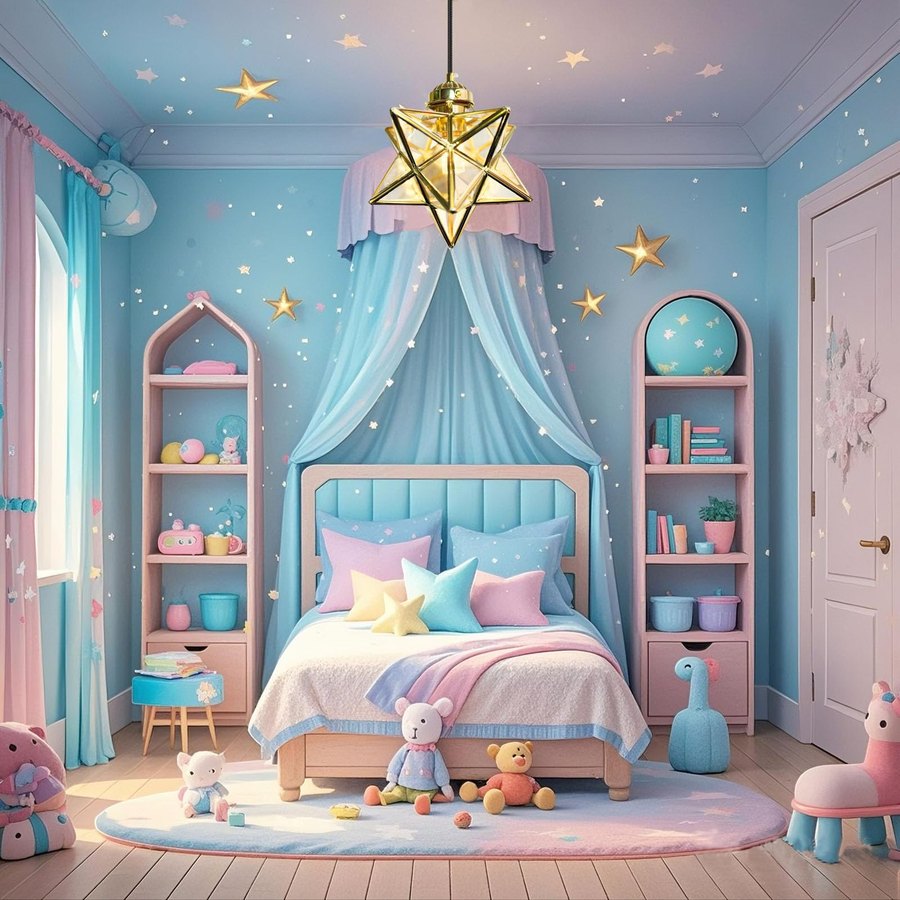
| Kids' room | Black or gold | Lightweight plastic frame, and the points of light read as a starry ceiling at bedtime. |
| Rental | Any of the four plastic-framed stars | Light enough for a removable adhesive hook, and it comes with you. |
Height, bulbs and care
- Height. Over a table or island, leave 30–36 in between the surface and the bottom of the star. In a hallway, keep at least 7 ft of clearance. Over a bed, high enough that nobody sits up into it.
- Size. All five are 7.48 in (19 cm). One over a small island, two on a longer run.
- Cord. Every star here is plug-in: 16.4–16.5 ft with an in-line switch and a standard US plug. Measure to your outlet before you buy.
- Bulb. A three-setting E26 LED is included on every model — bright, soft and warm neutral, cycled from the cord switch. Any standard E26 bulb works as a replacement.
- Care. Dust with a dry or slightly damp cloth; do not soak it or run it under water. Brass and glass deserve a little more care than the plastic frames.
- Usage. Indoor only, including covered and dry areas such as an entry or a sheltered porch.
- Cover. 30-day returns and a 1-year replacement warranty on every star.